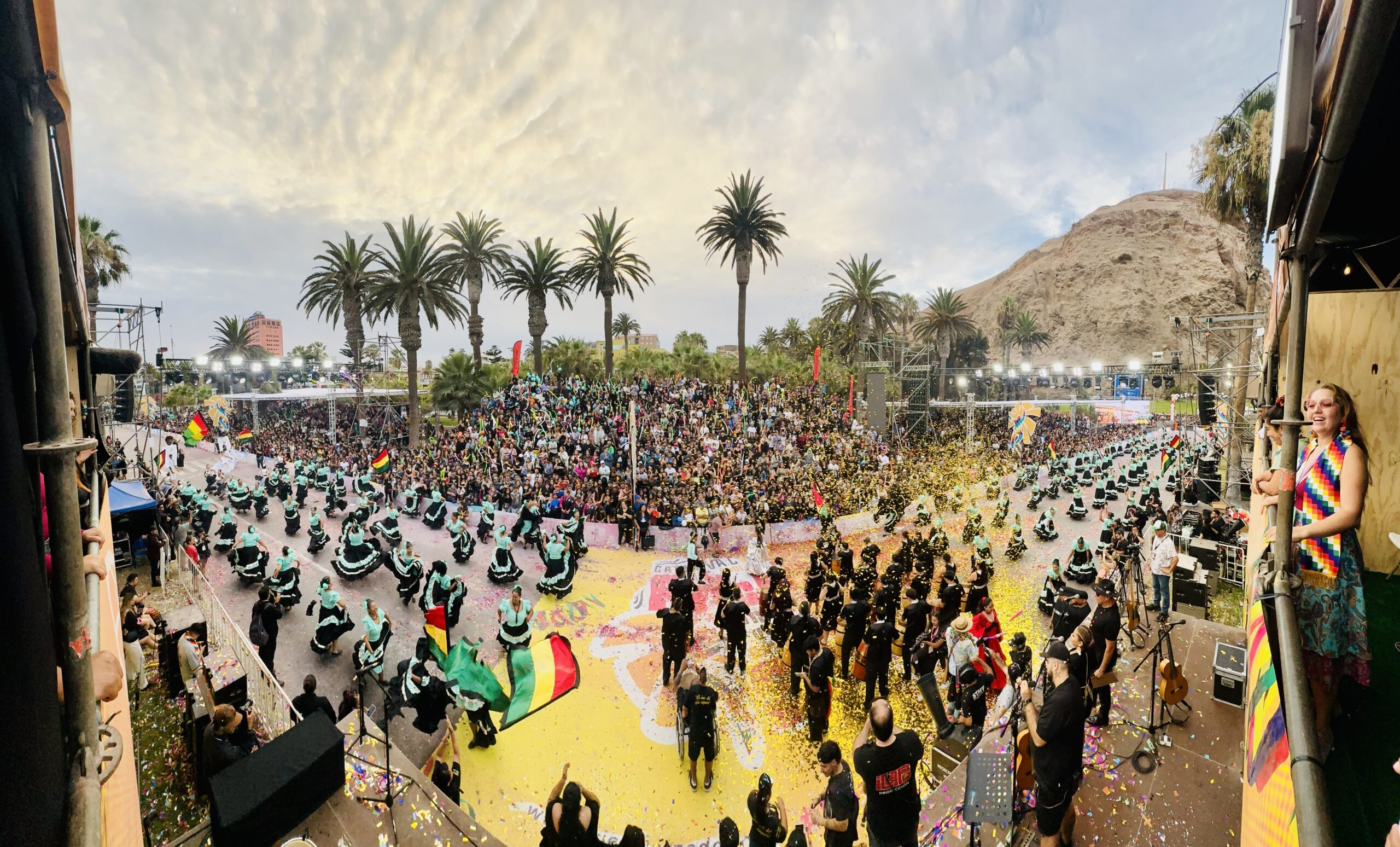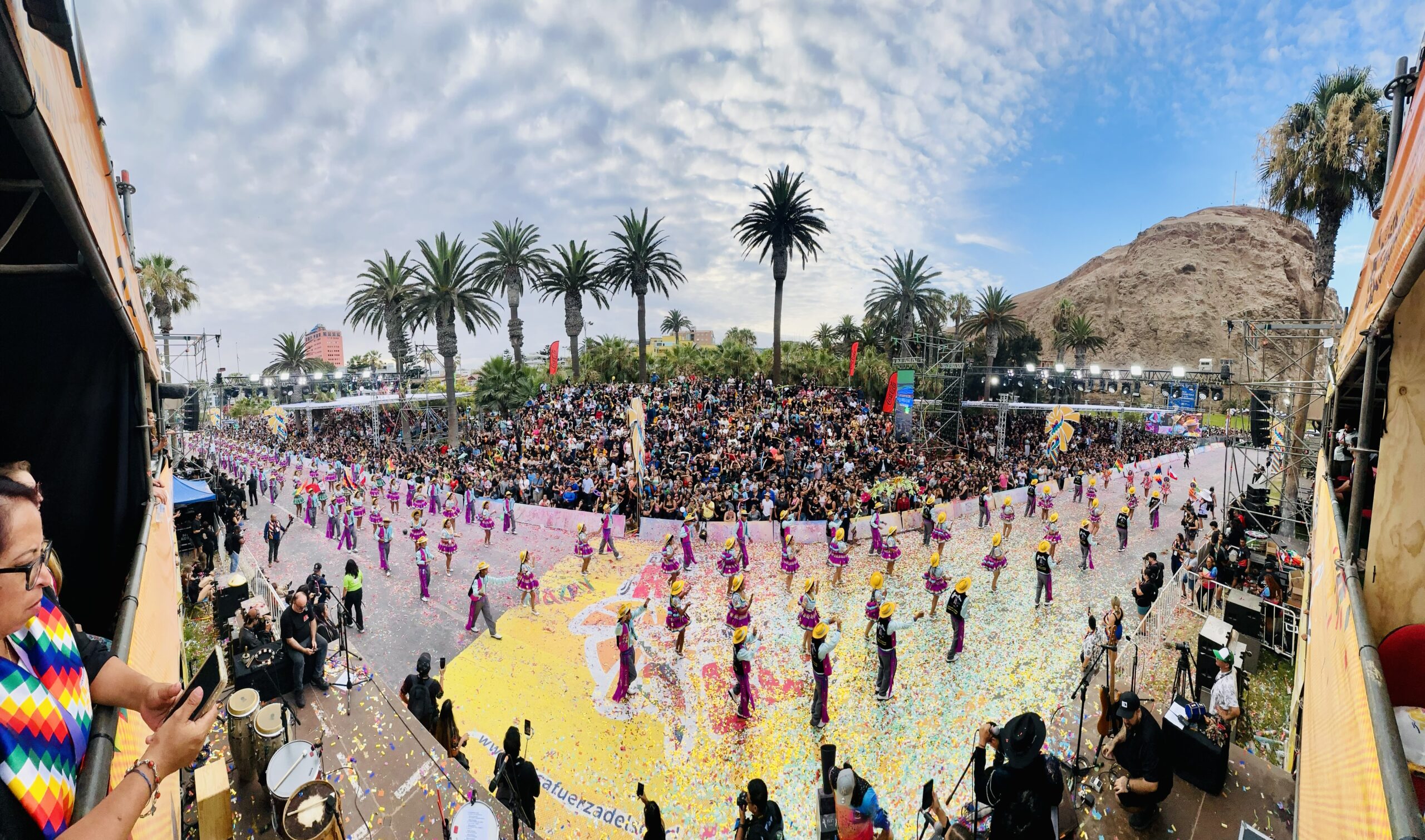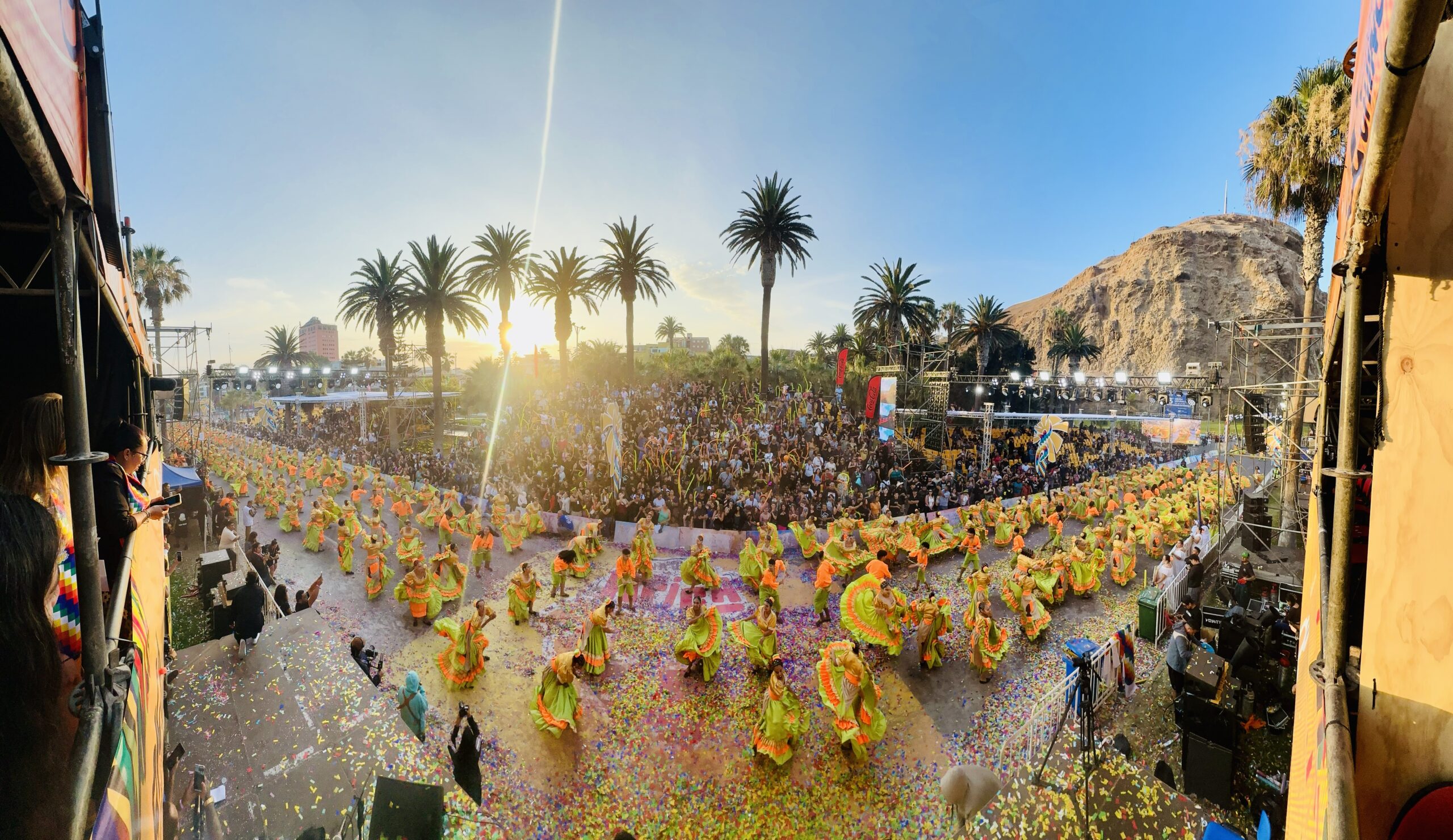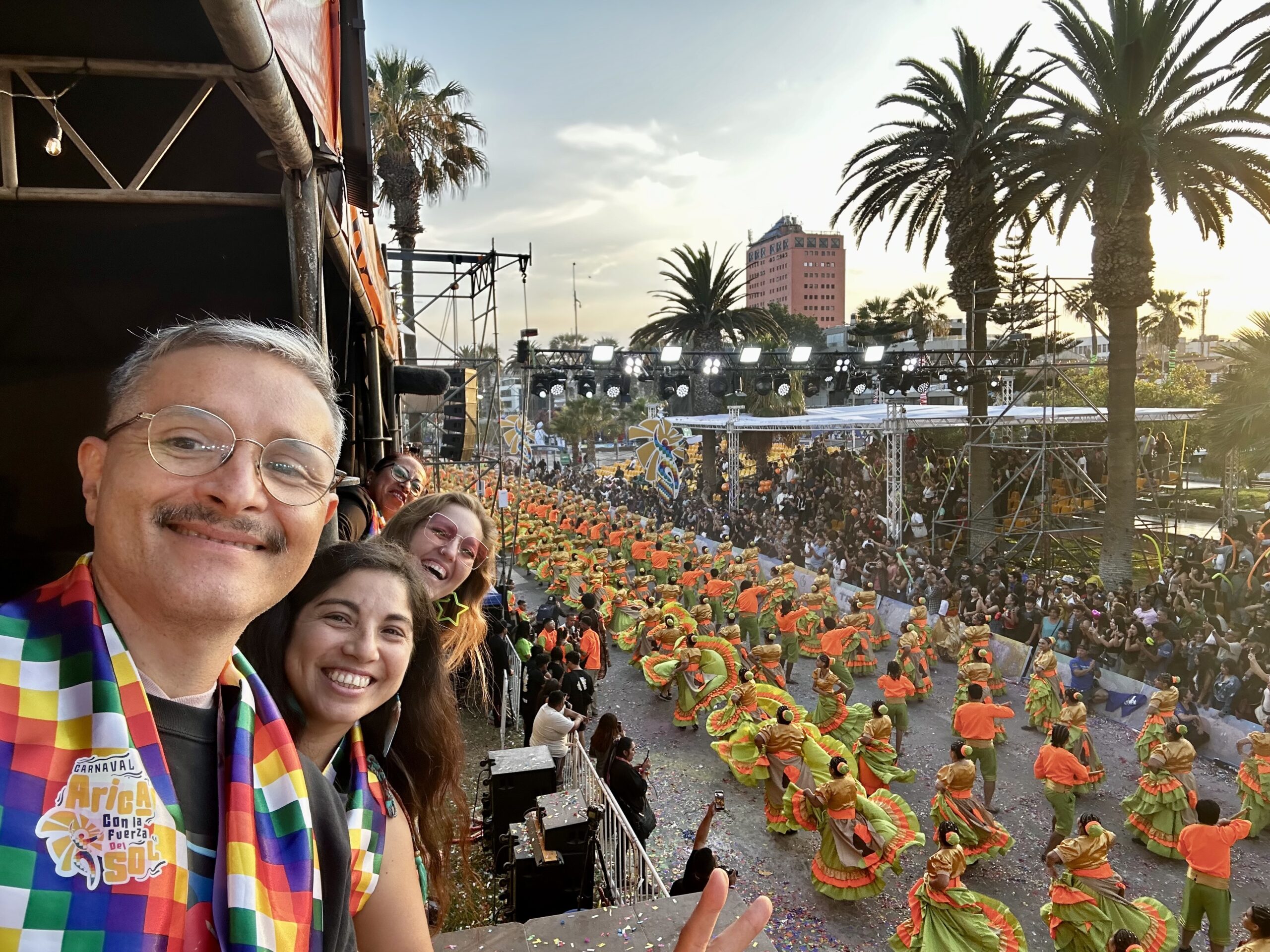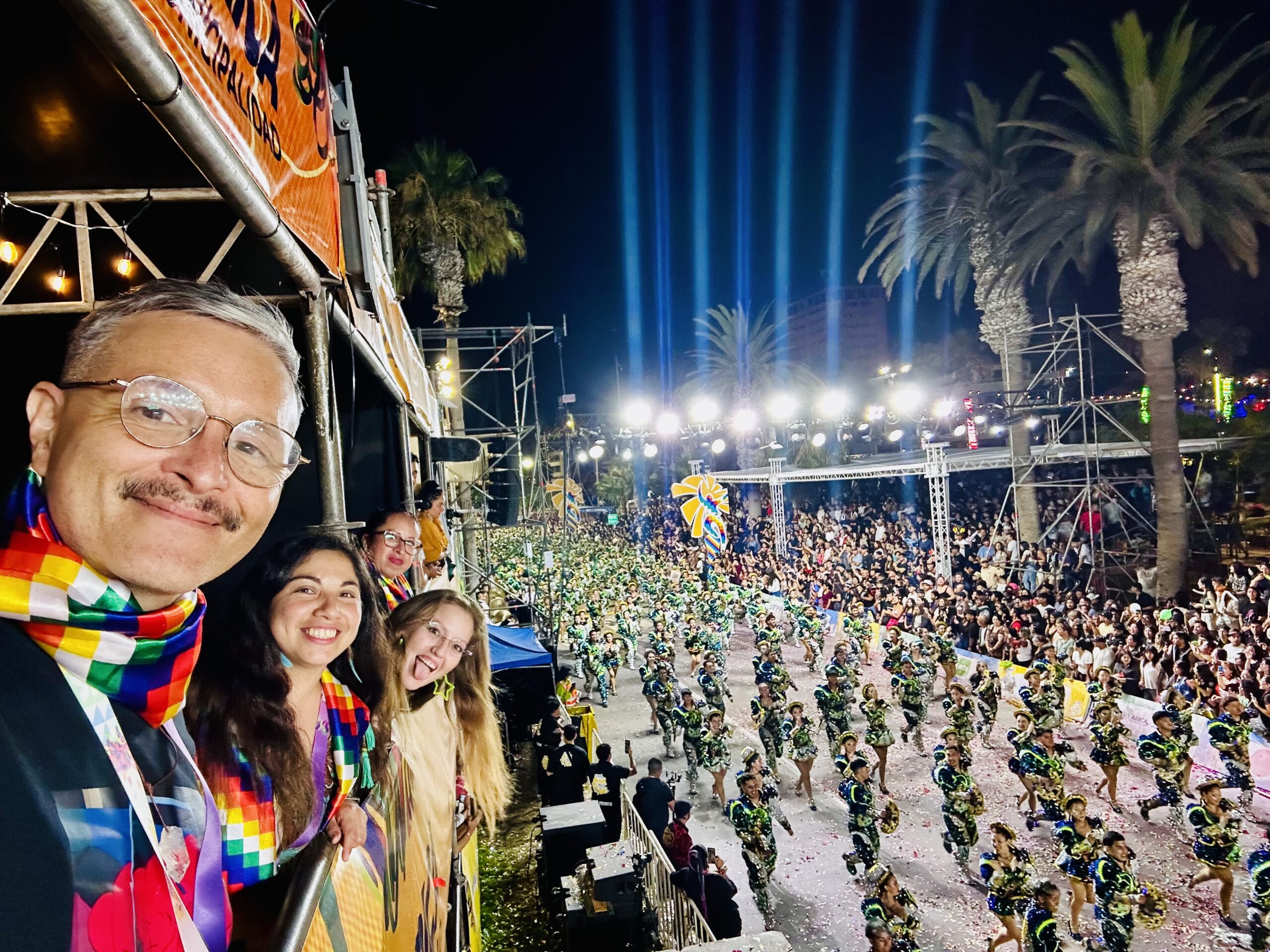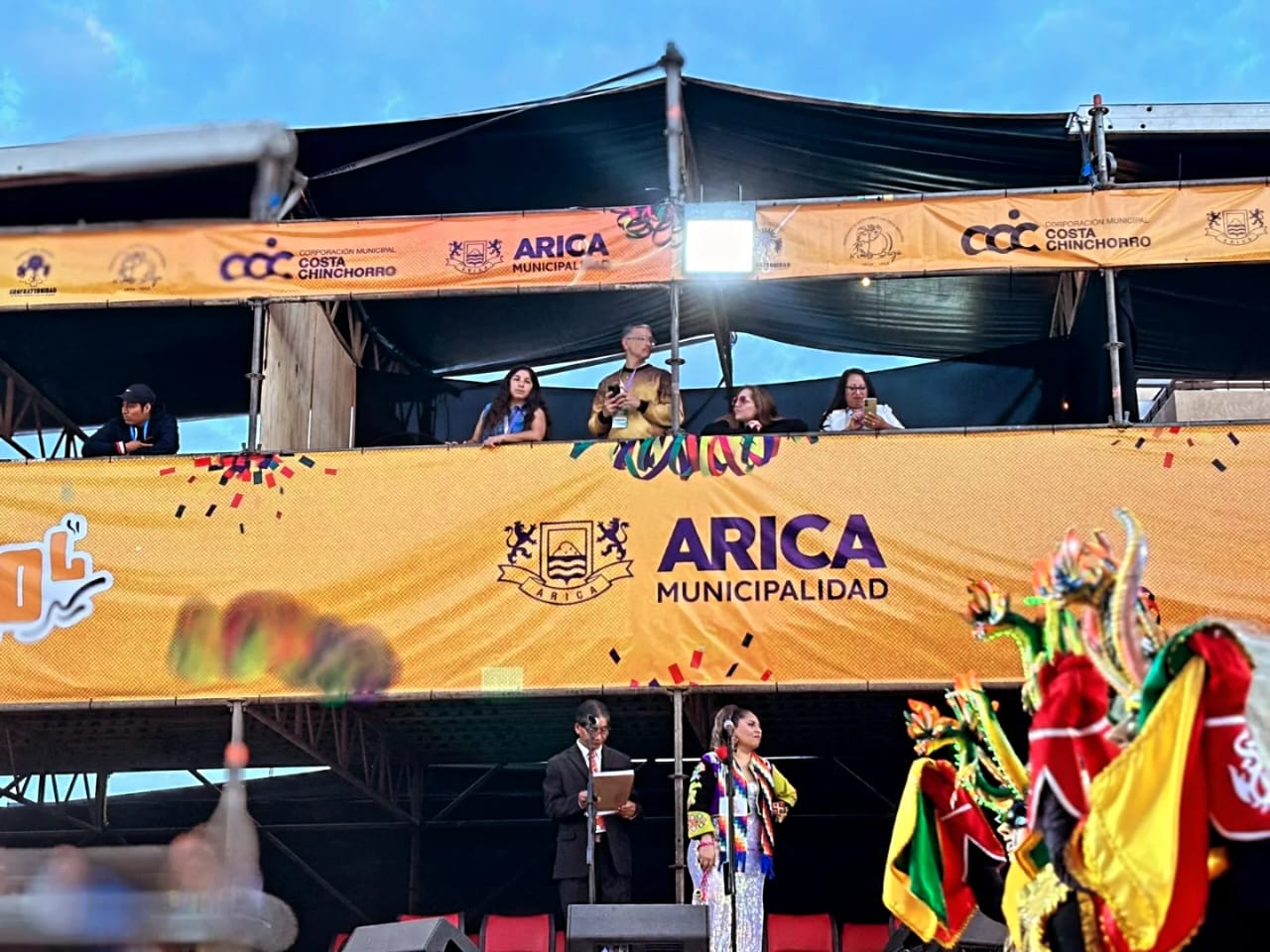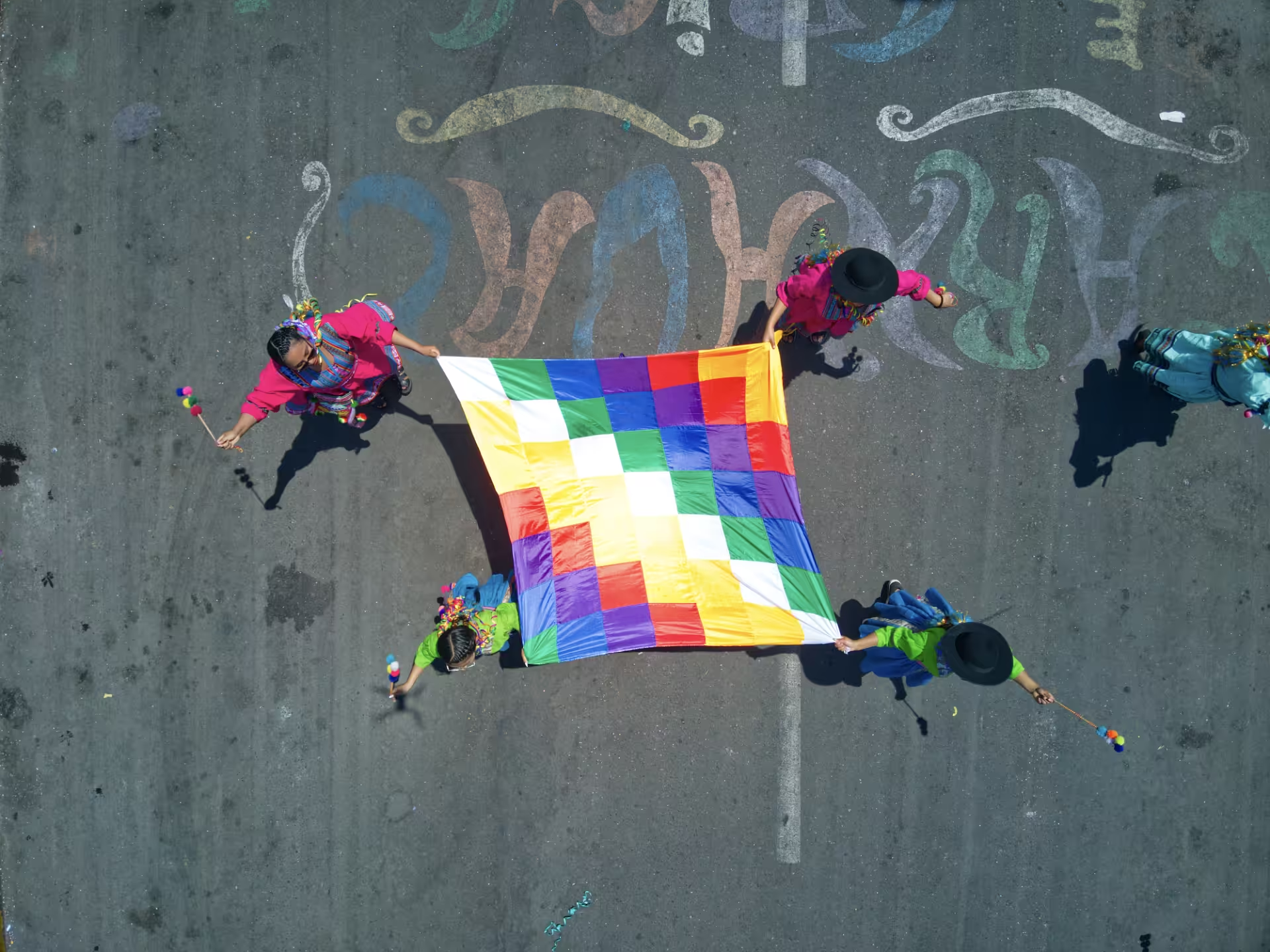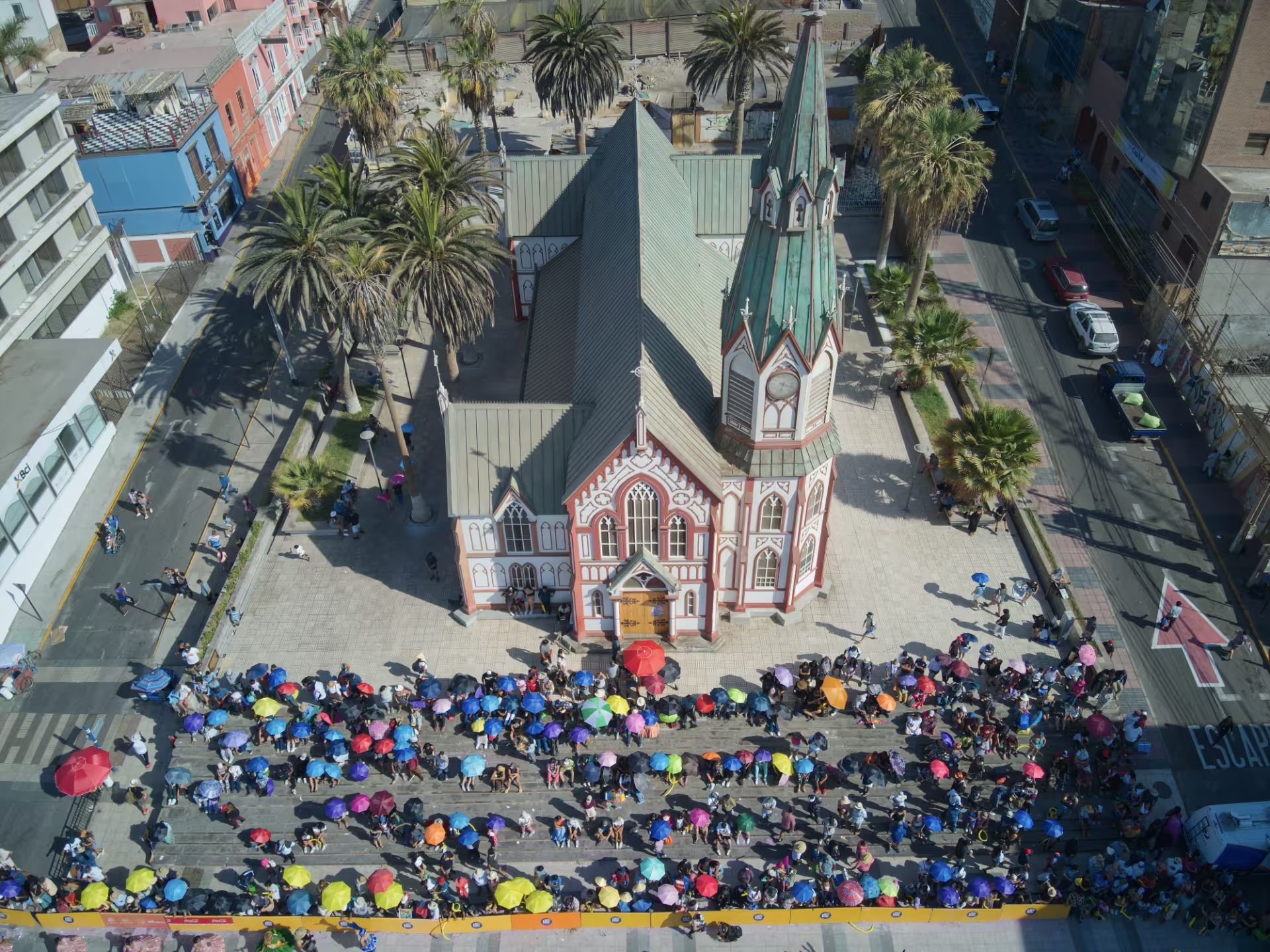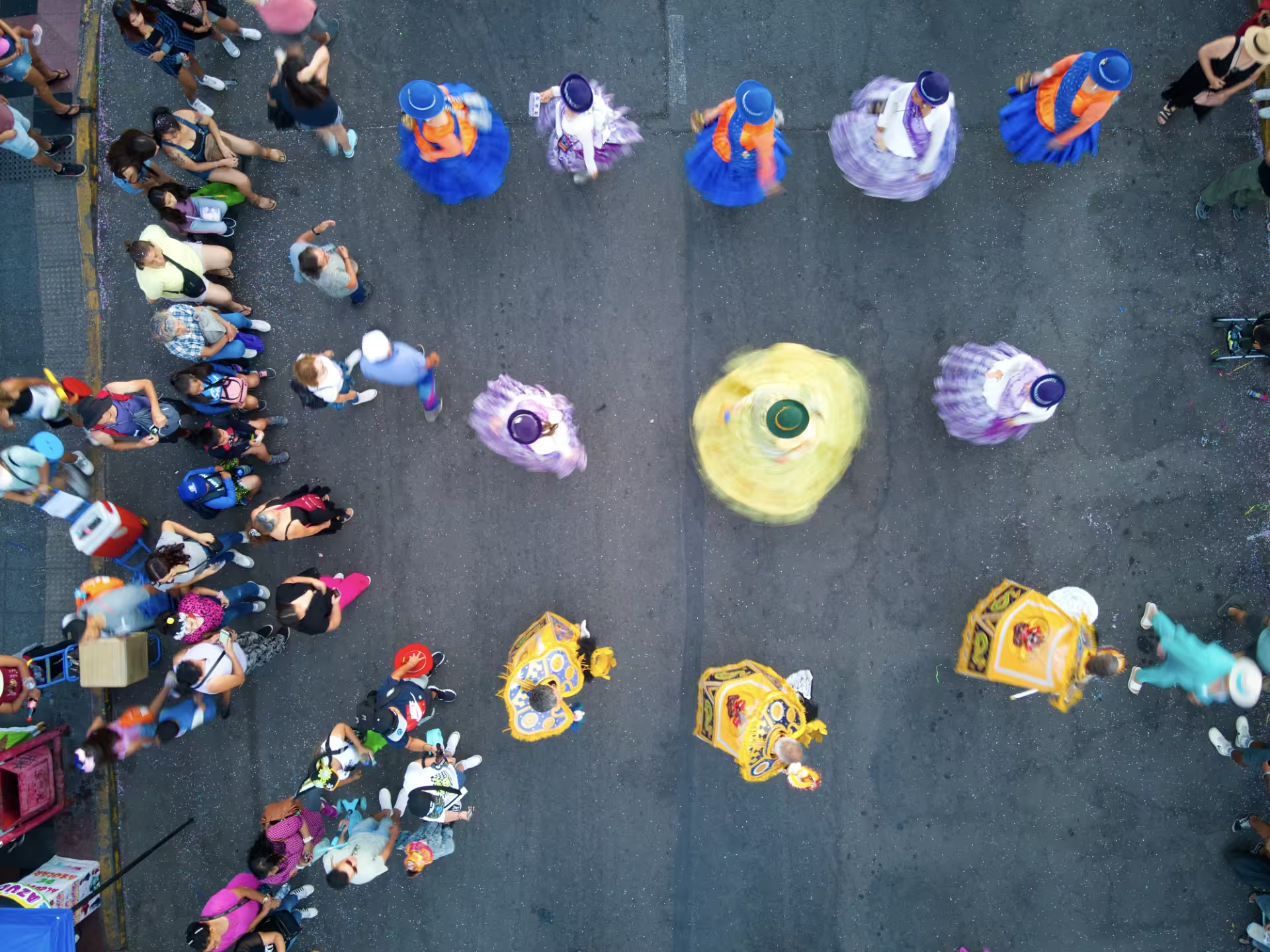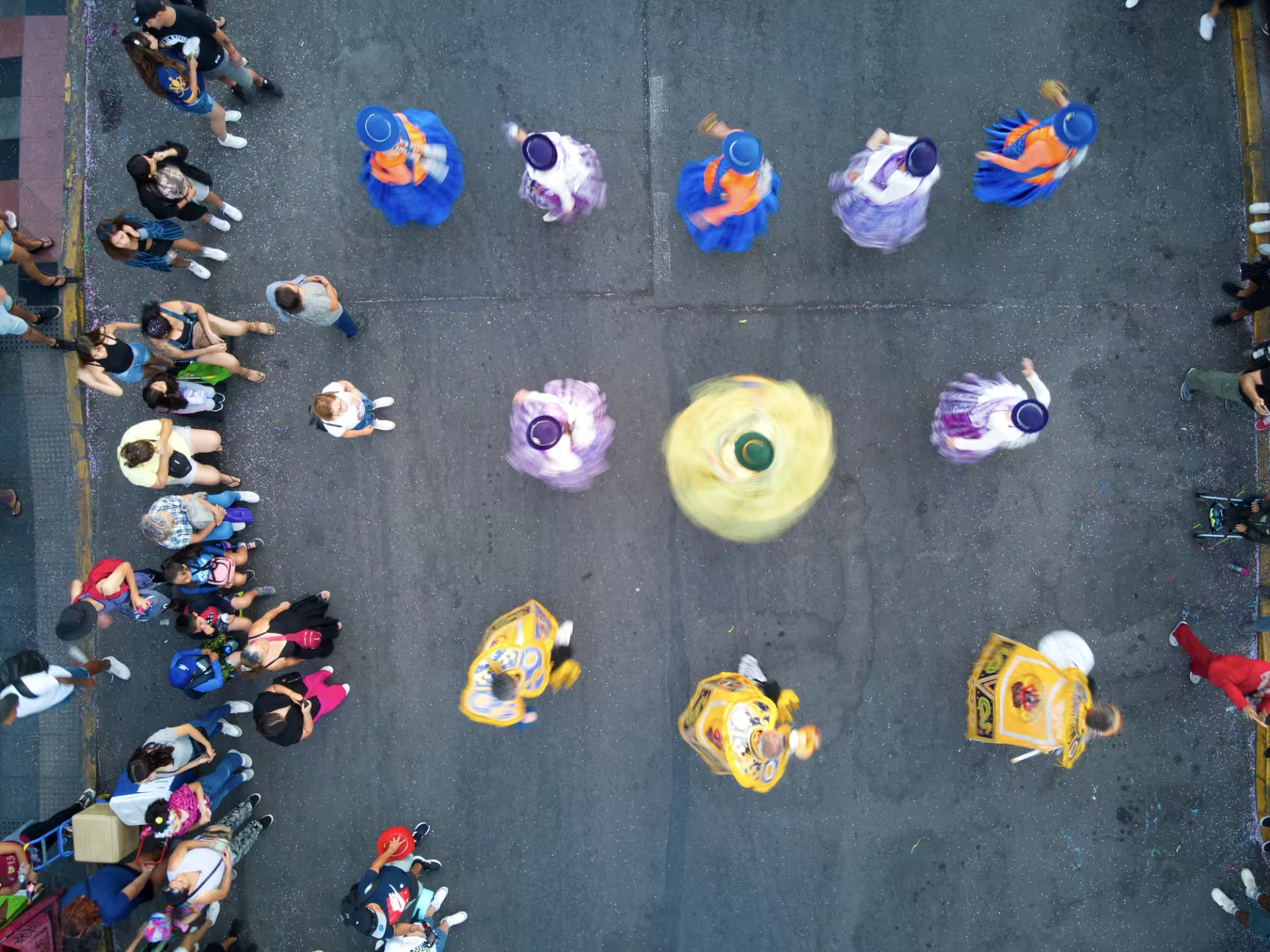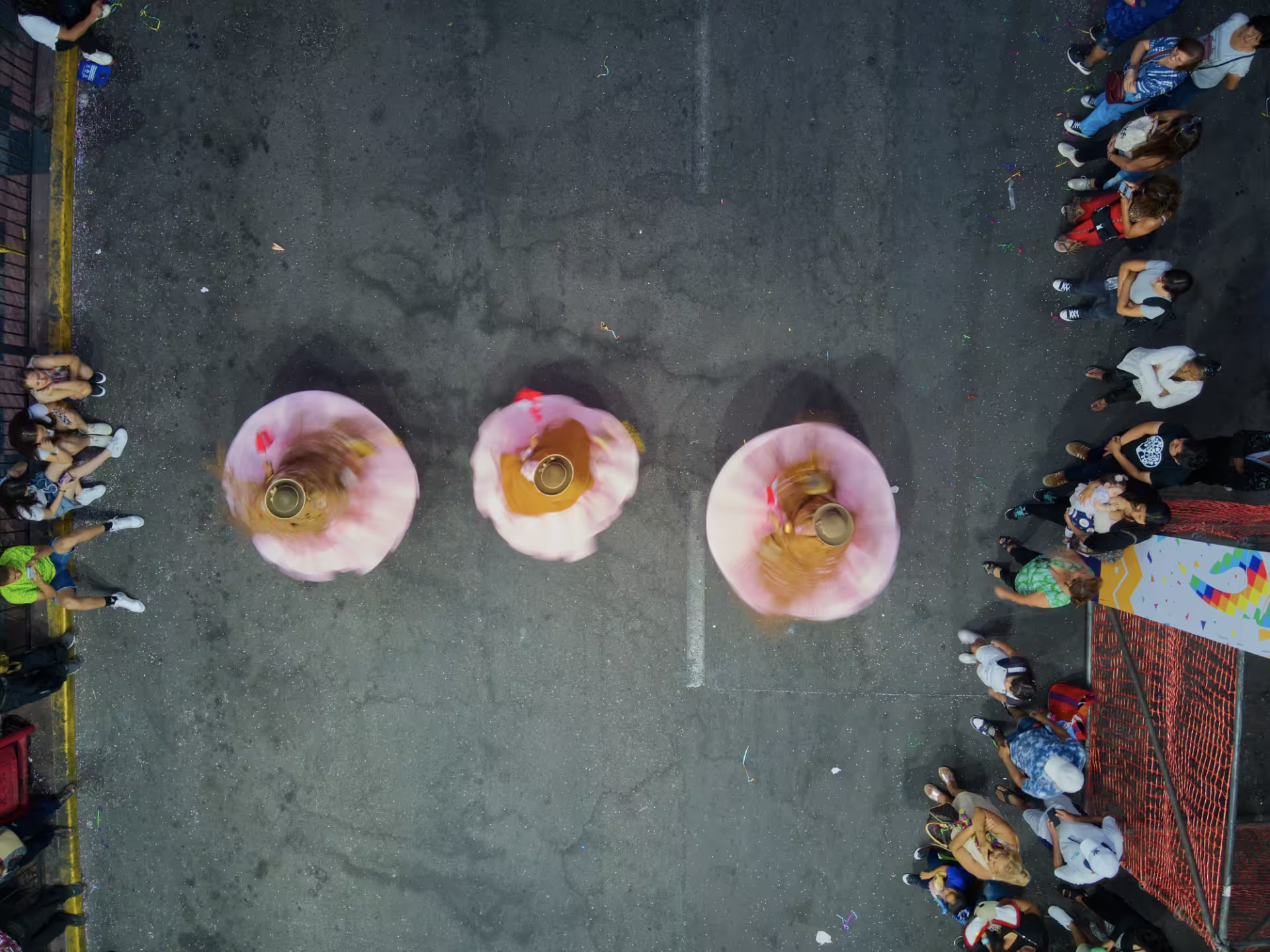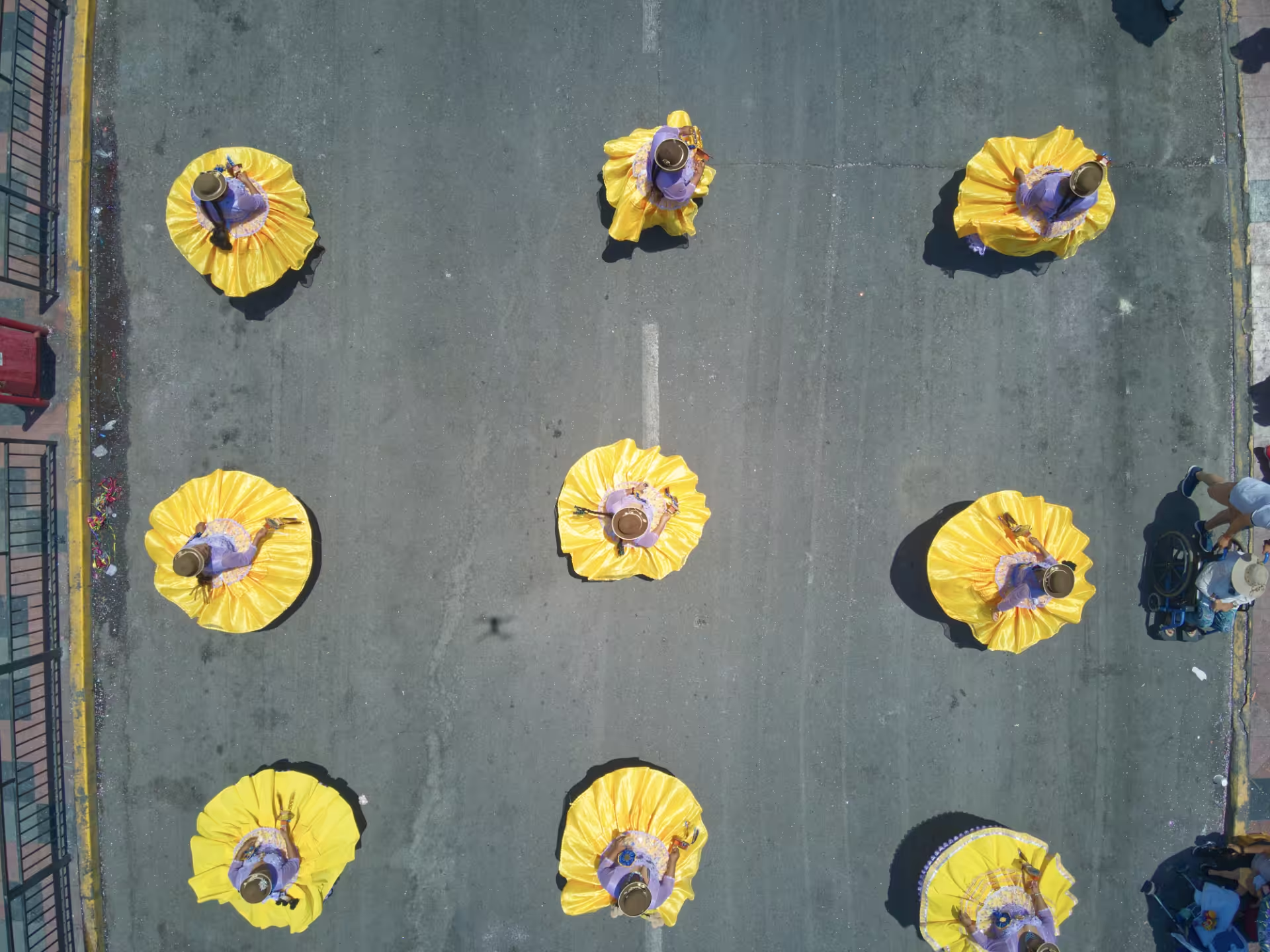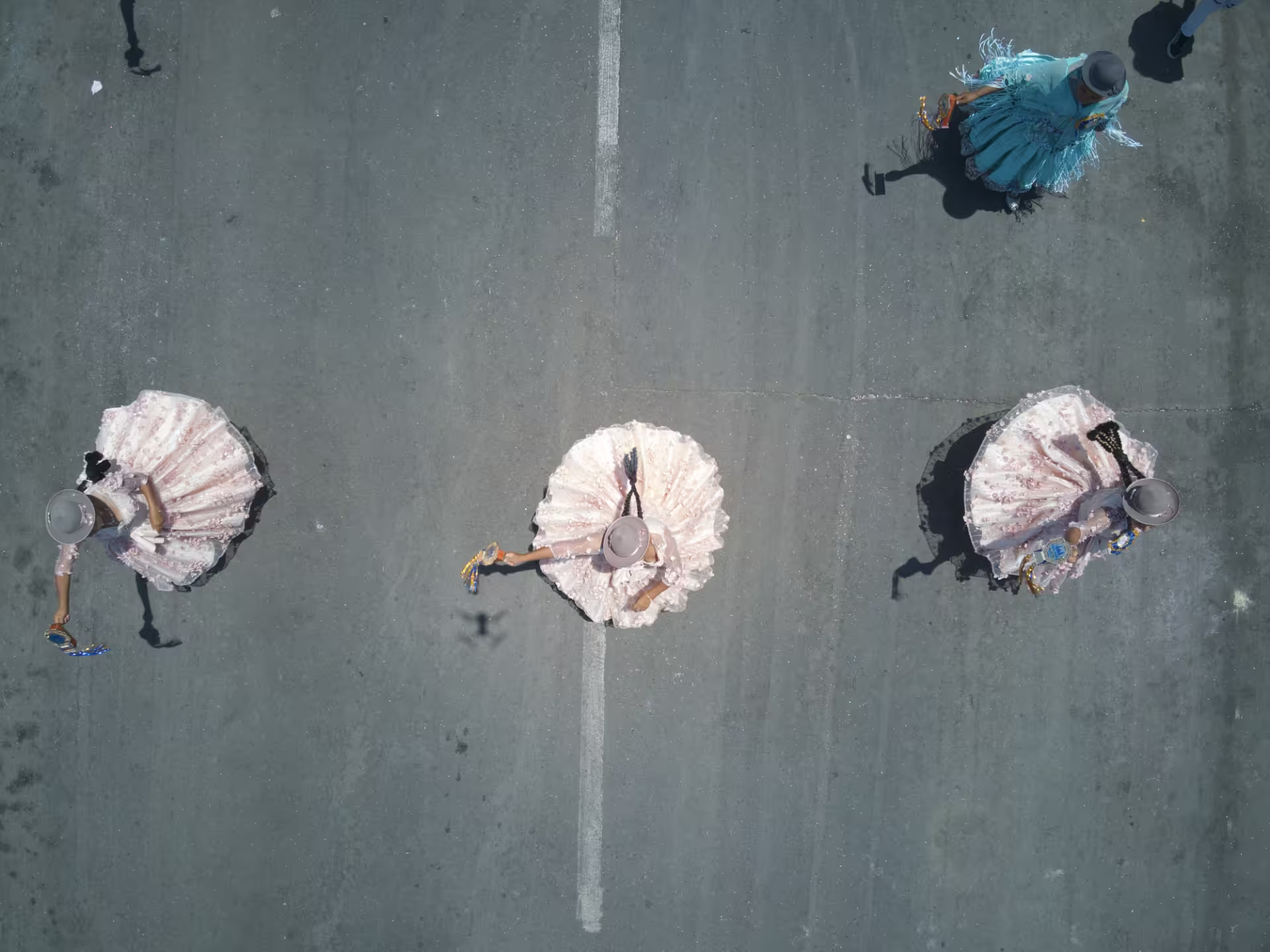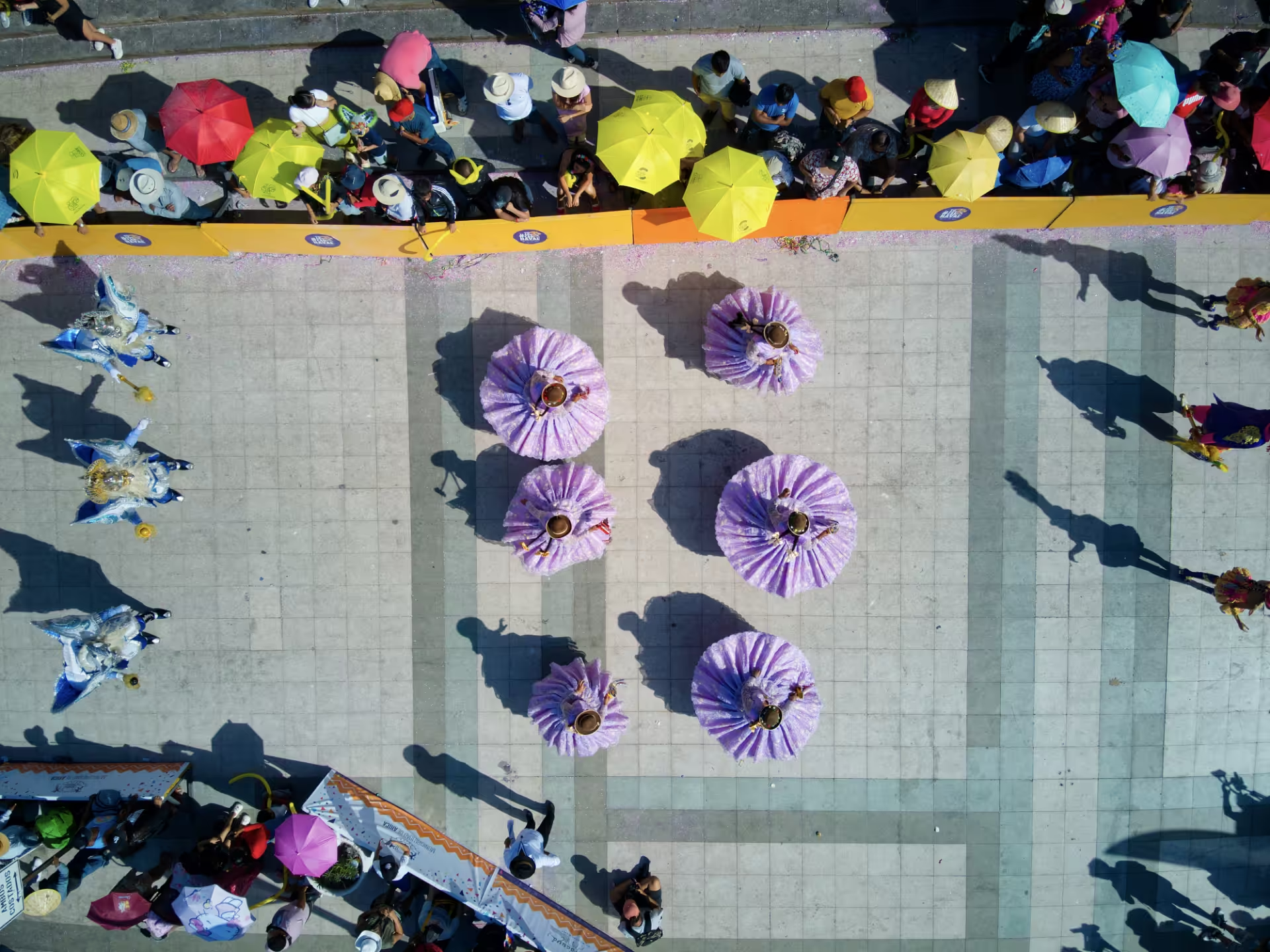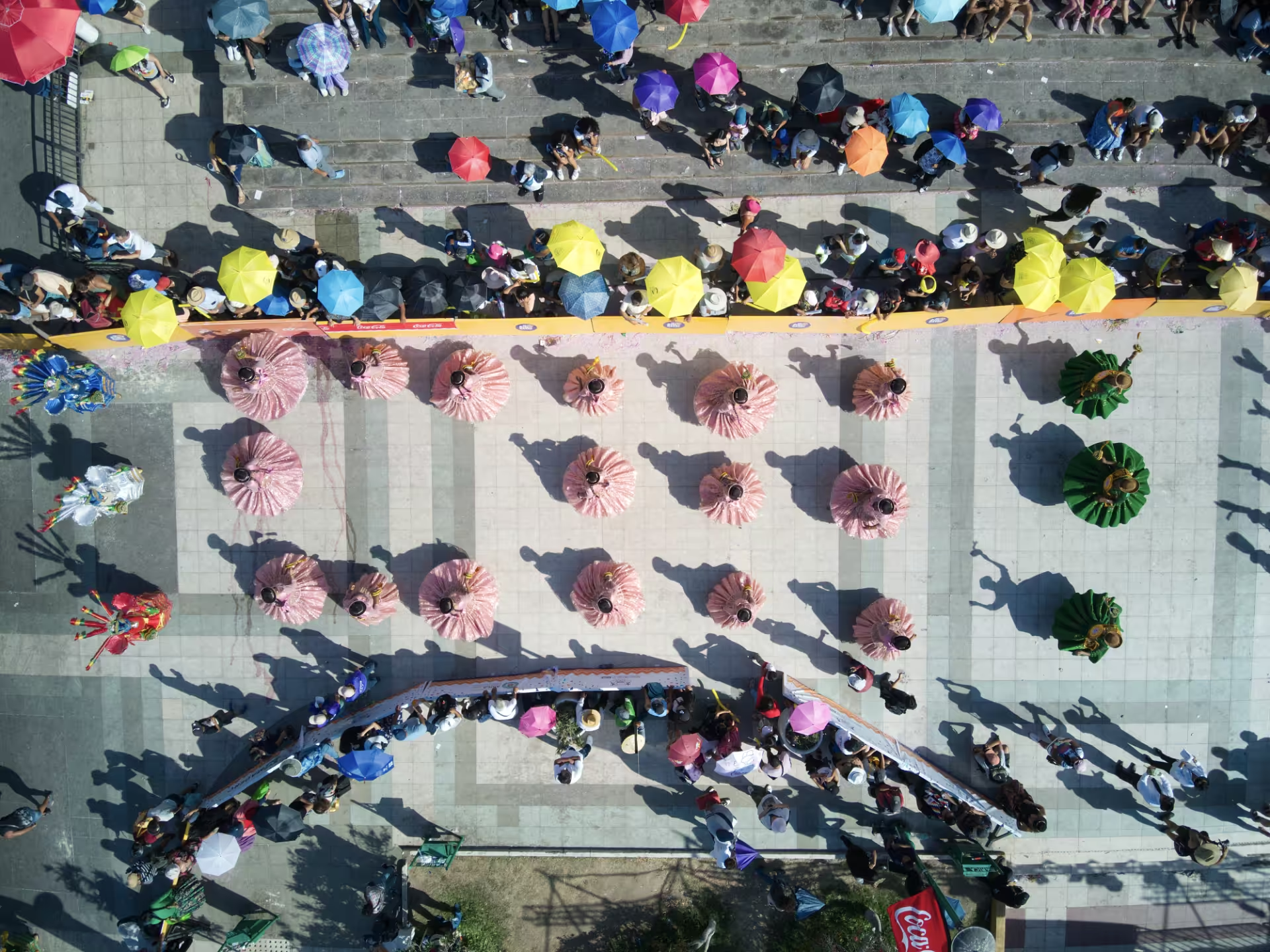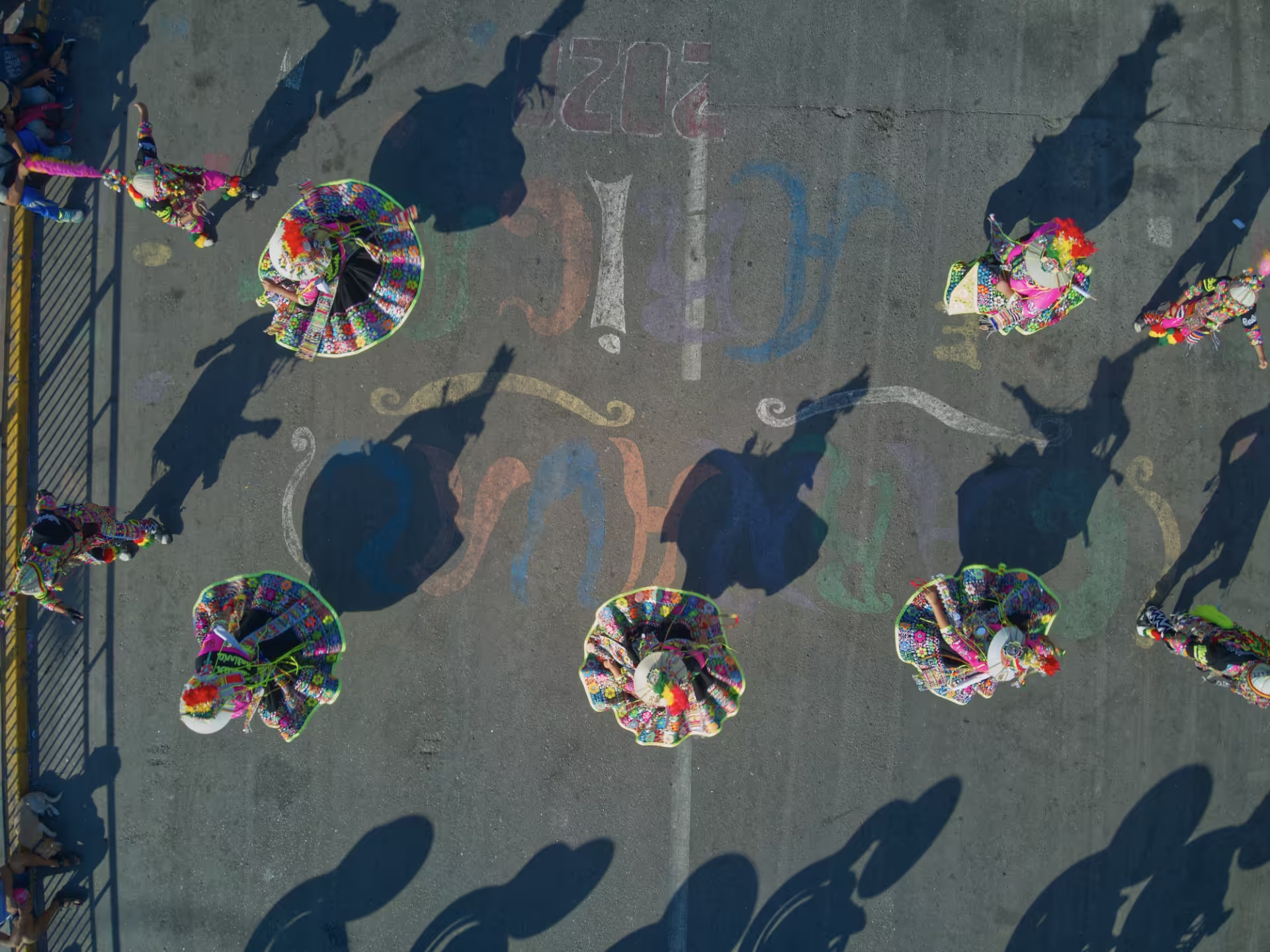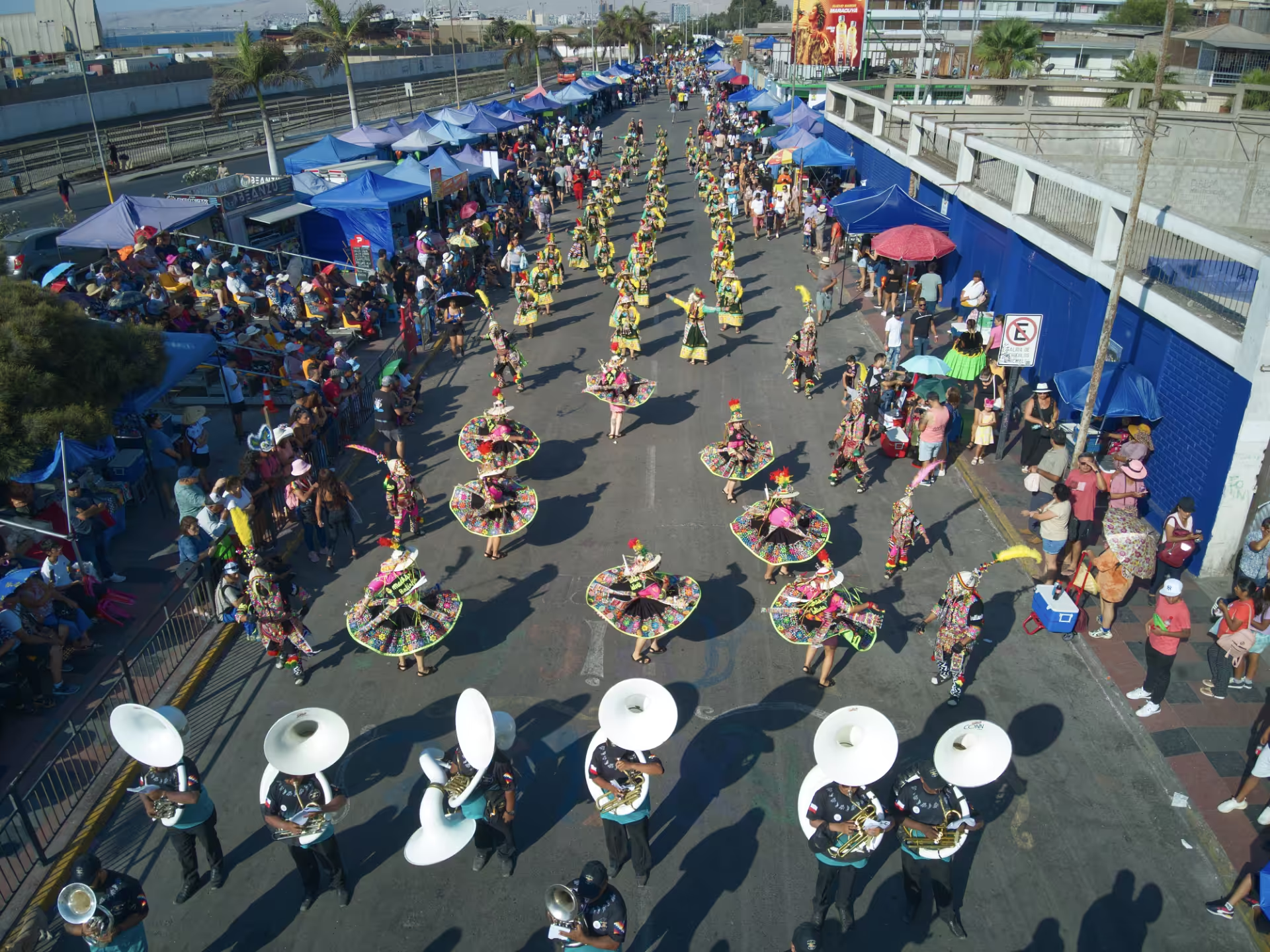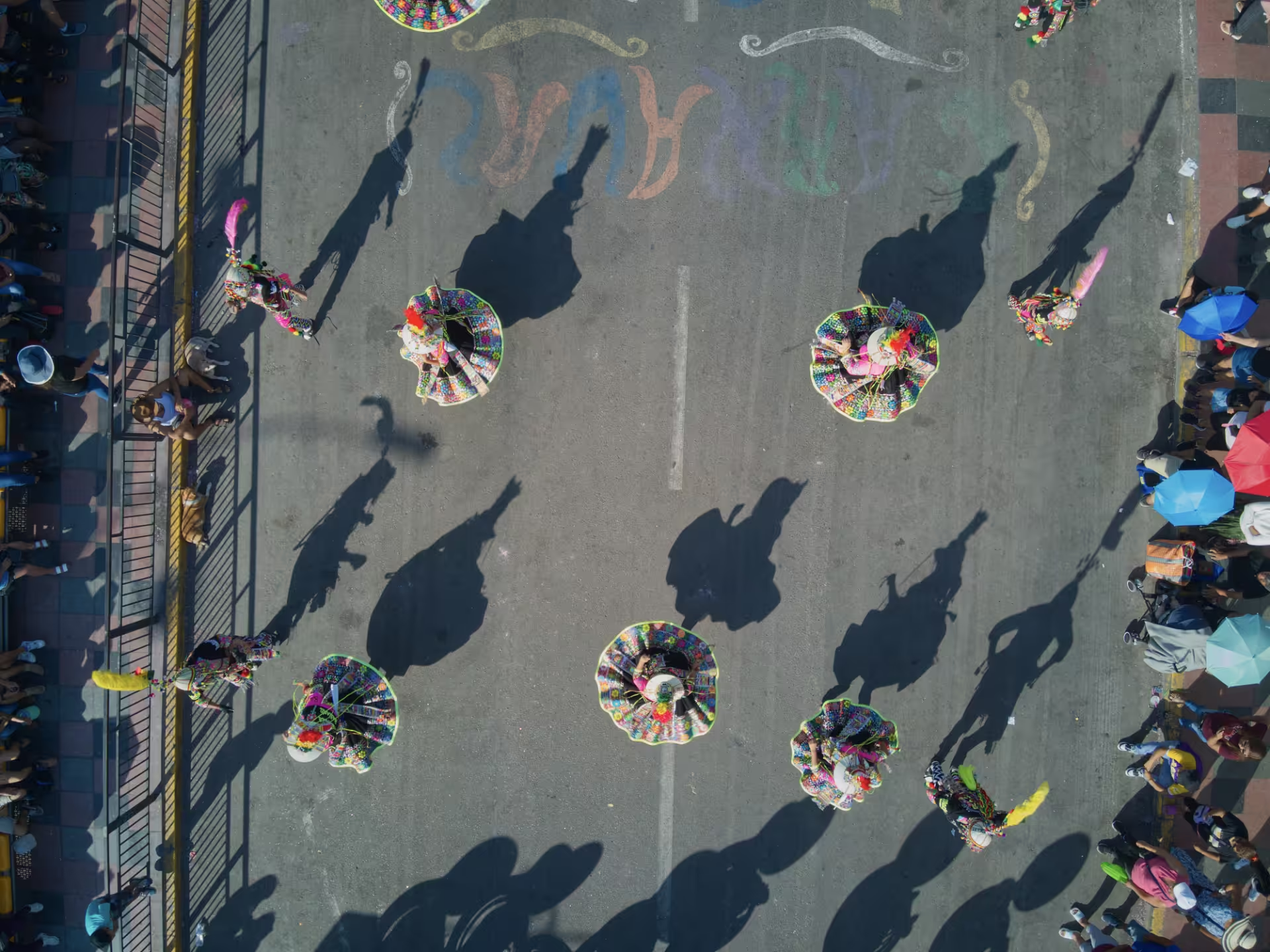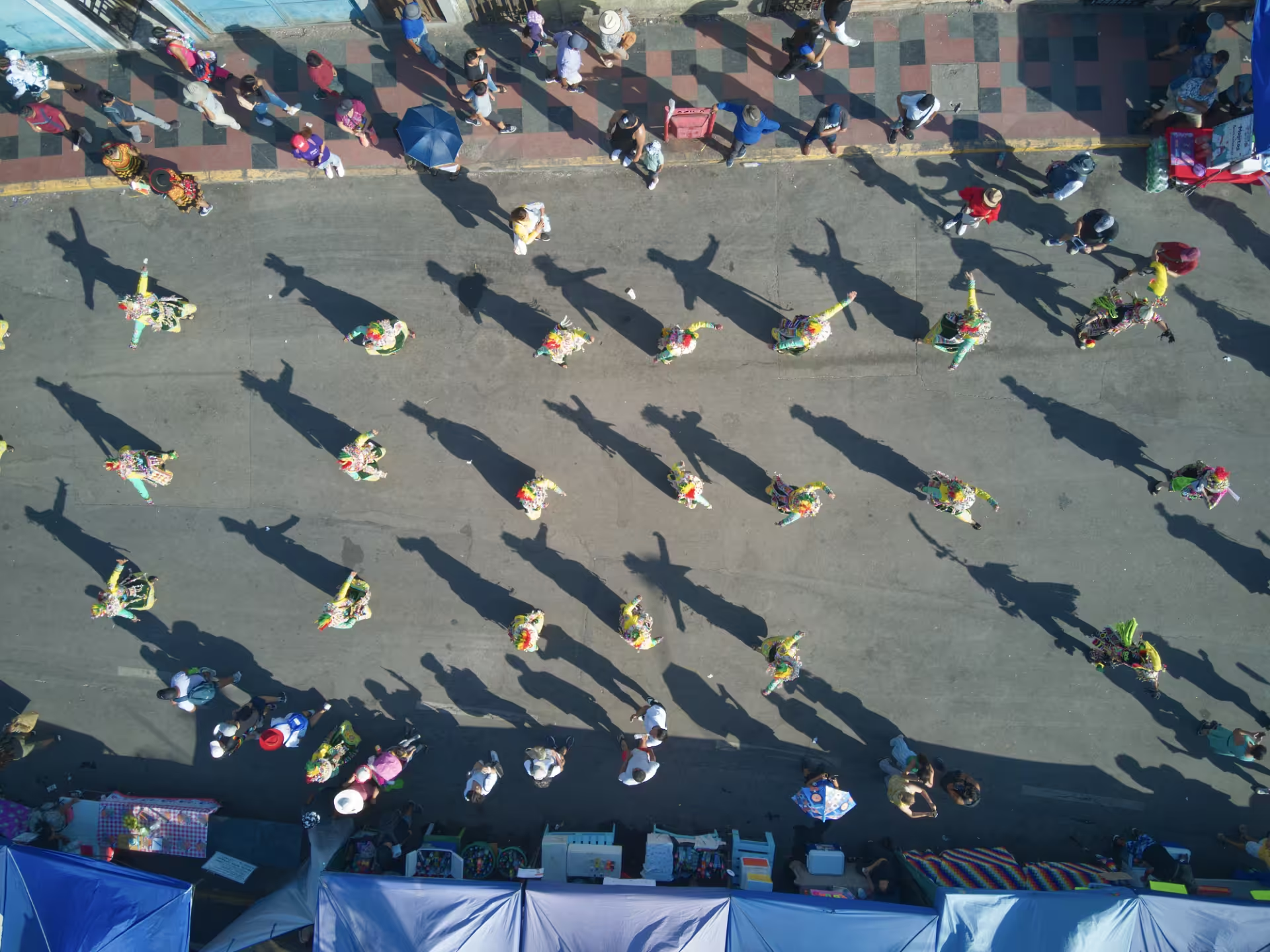
Hace poco me tocó vivir un evento que me permitió conectar mi experiencia como Diseñador con mis raíces ariqueñas: mi participación como jurado en el Carnaval Andino “Con la Fuerza del Sol” 2026 en Arica, Chile.
Como ariqueño radicado en Berlín hace mas de una década, mi vínculo con Arica nunca se ha cortado. Viajo prácticamente todos los años para esquivar el invierno berlinés. Sin embargo, este último regreso fue distinto. Volví para acompañar a mi madre en su batalla contra el cáncer y, en medio de ese proceso tan personal, recibí la invitación para ser parte del equipo de 12 jurados del carnaval. Normalmente habría dicho que no, pero tras conversarlo con ella, acepté, transformando esta labor en un homenaje a su memoria tras su partida semanas después.
El Ojo del Diseñador en la Pista de Baile
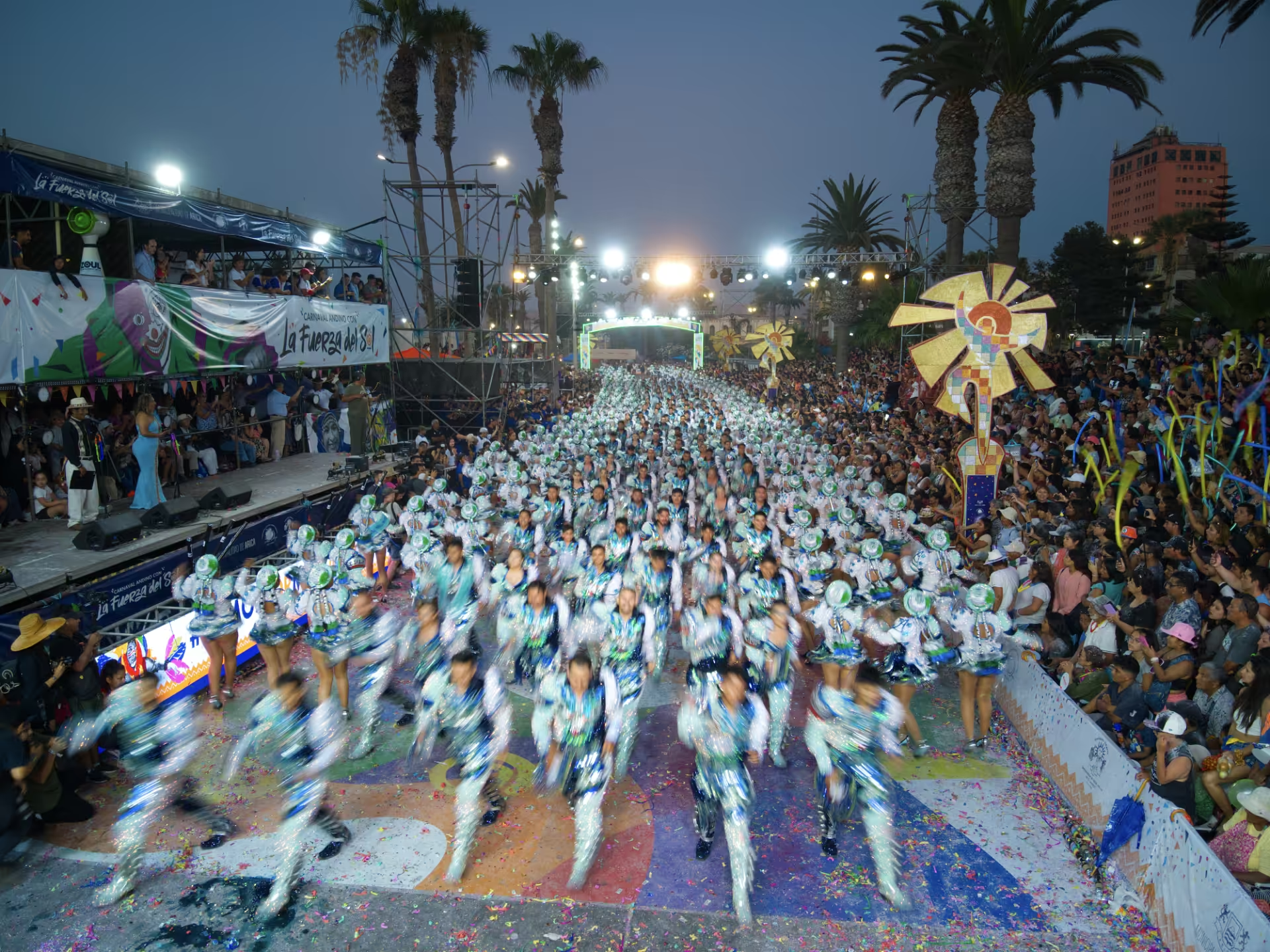
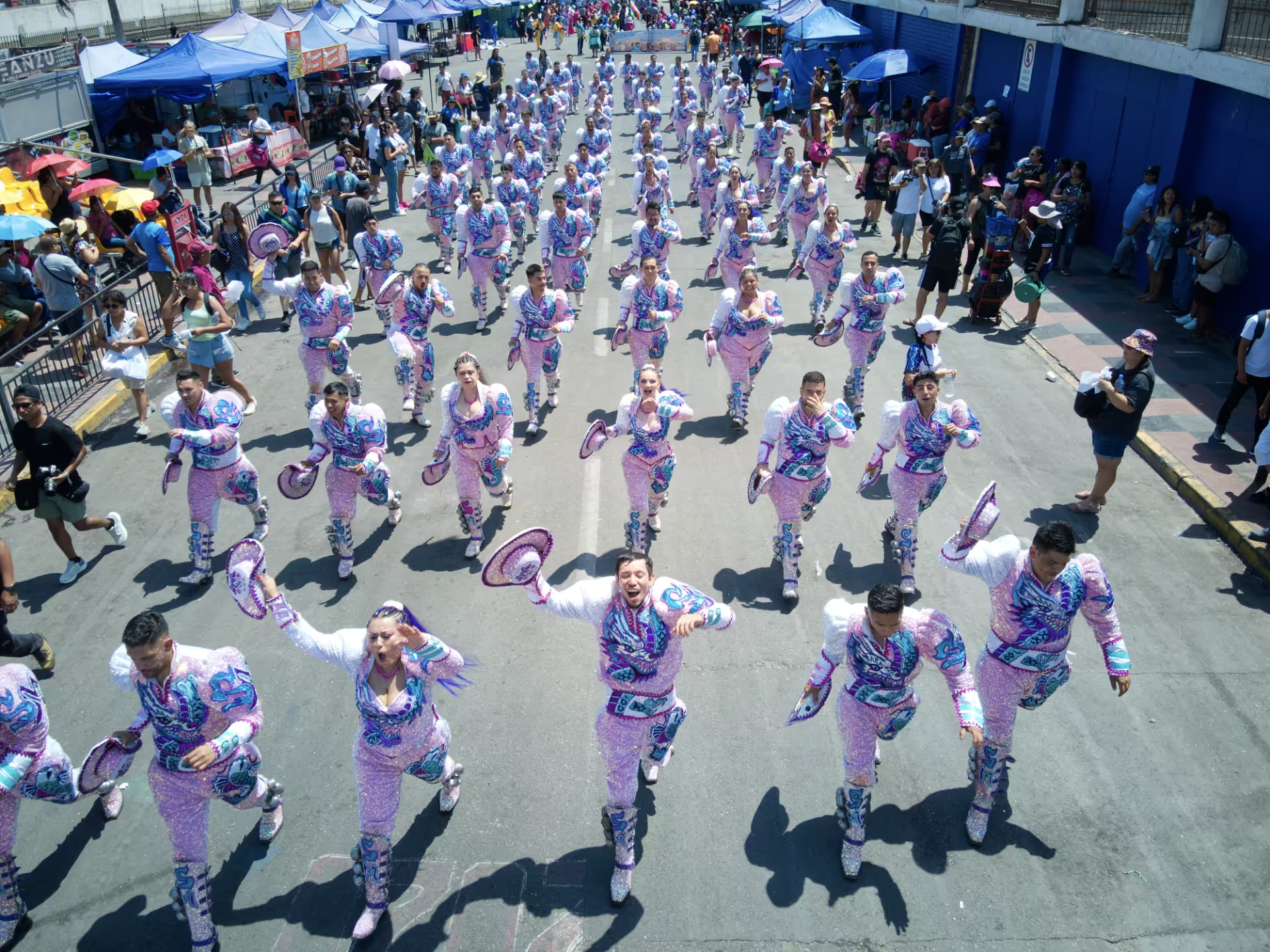
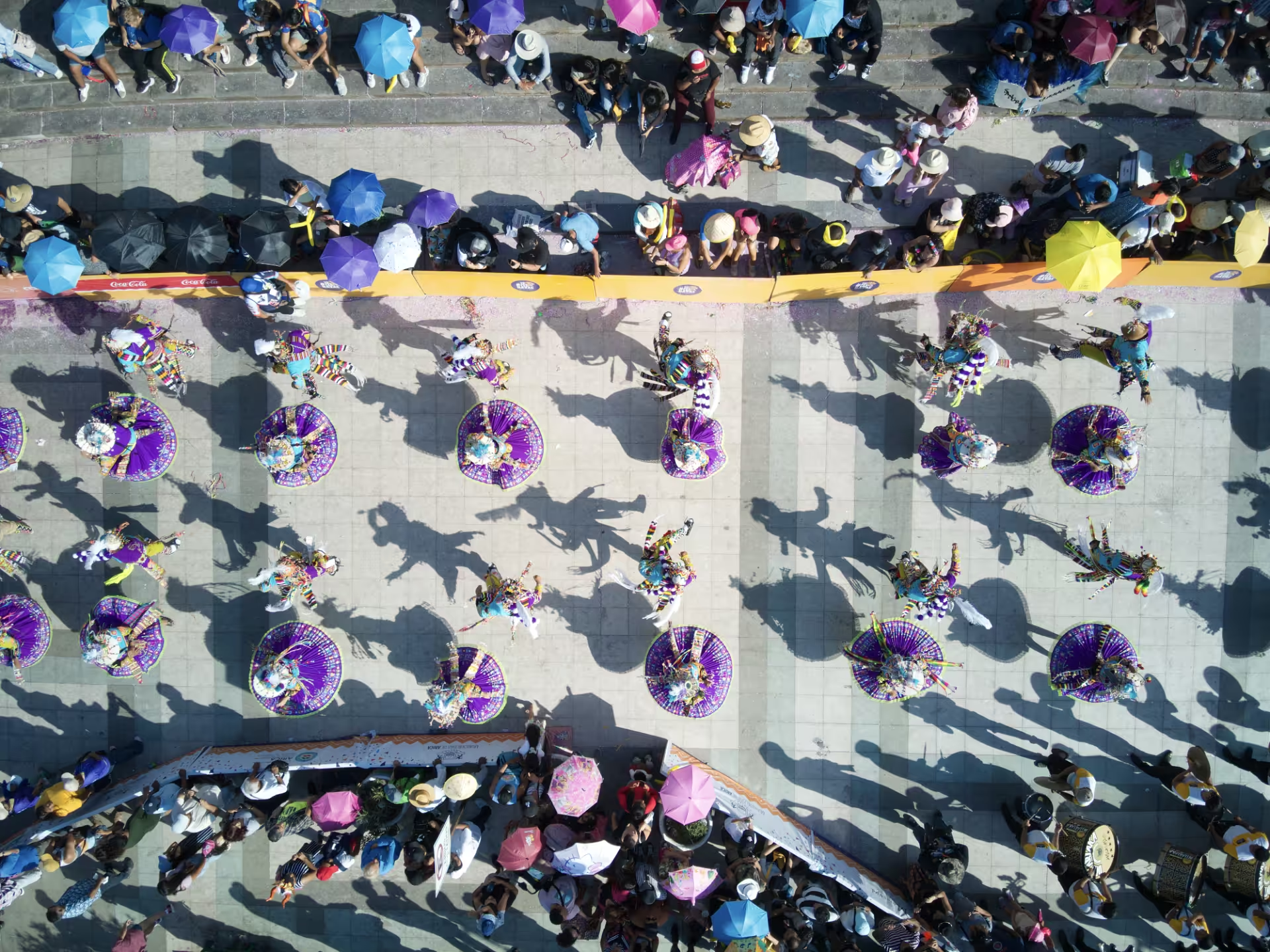
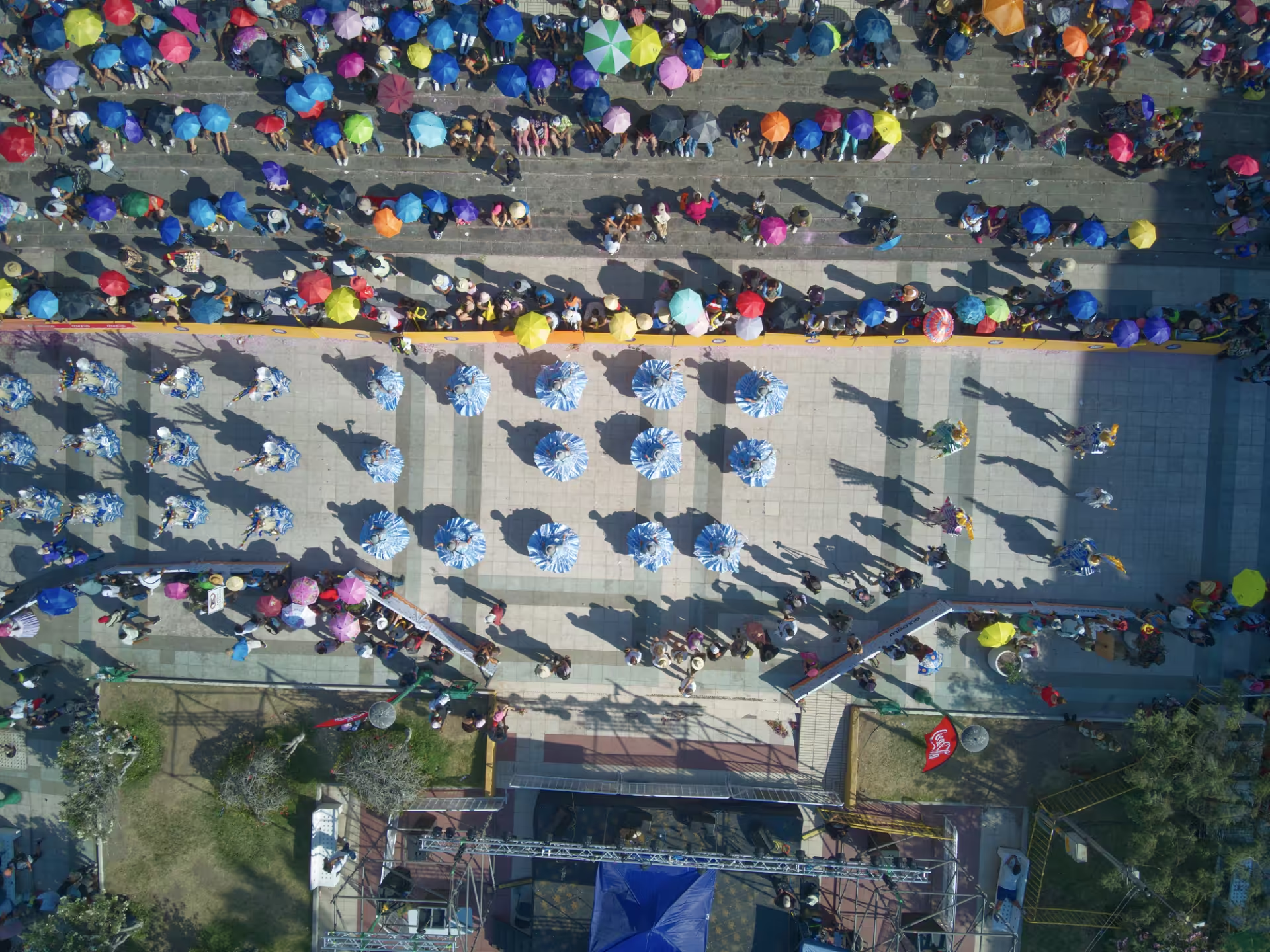
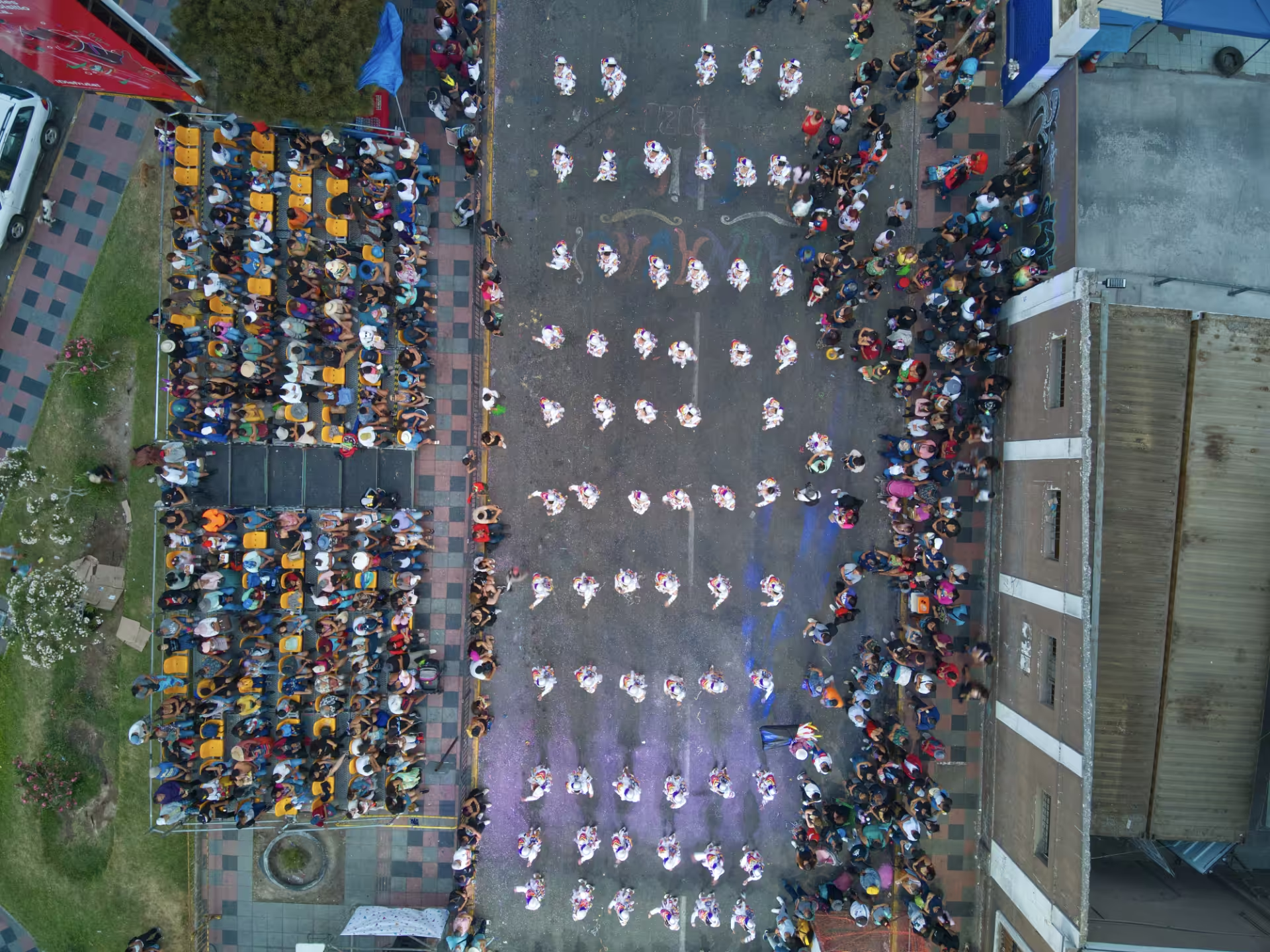
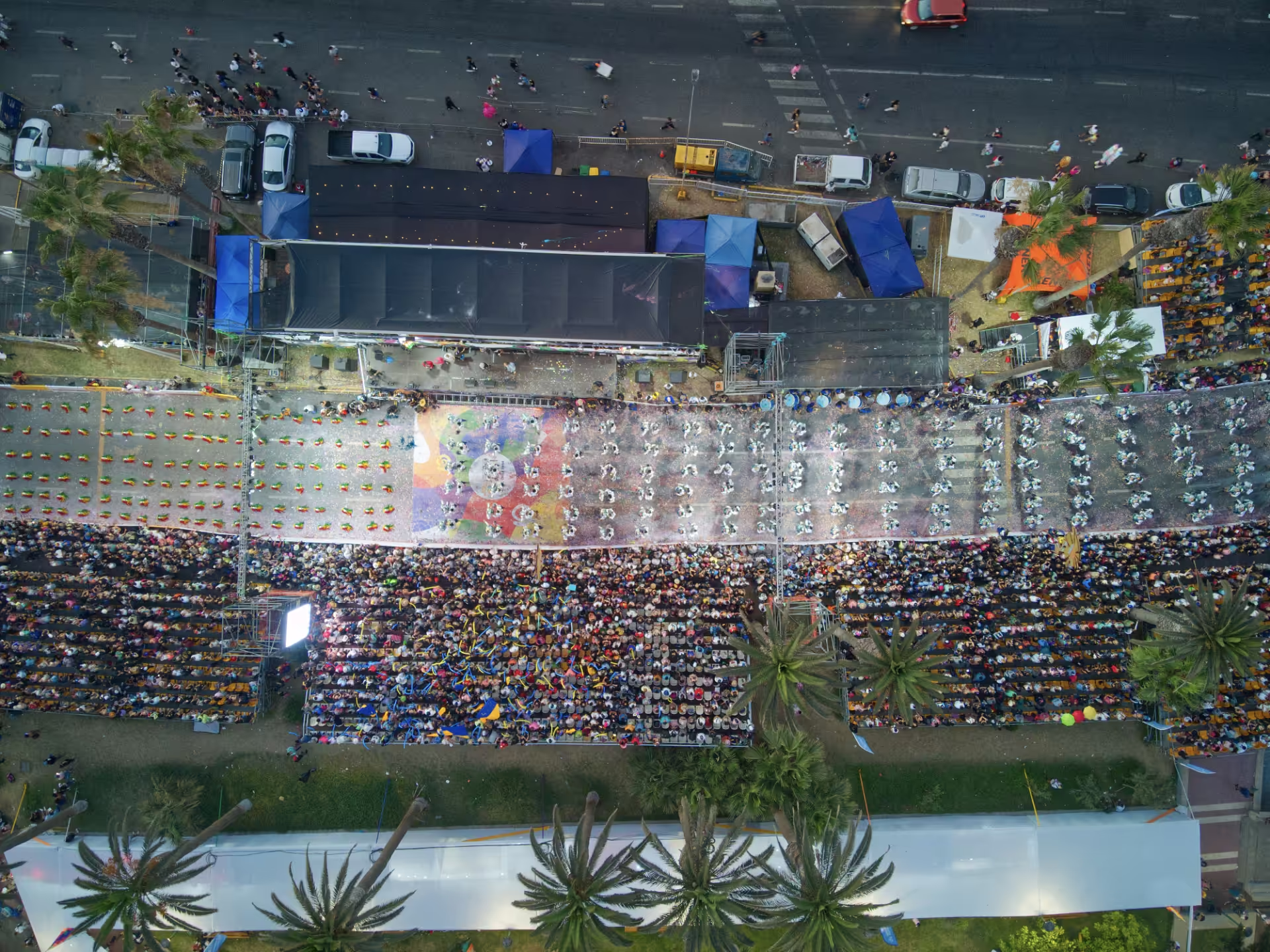
Participar como jurado significaba tener los 5 sentidos durante 6 horas sin parar. Teníamos de todo para comer y tomar, y la mejor vista de la pista principal, donde a la vez una sola agrupación podía tener más de 500 bailarines desplegados. Fue un gran desafío logístico y cognitivo. Durante tres noches seguidas, en turnos que se extendían desde las dos de la madrugada hasta pasadas las nueve de la mañana, tuvimos la tarea de evaluar a 68 agrupaciones en competencia.
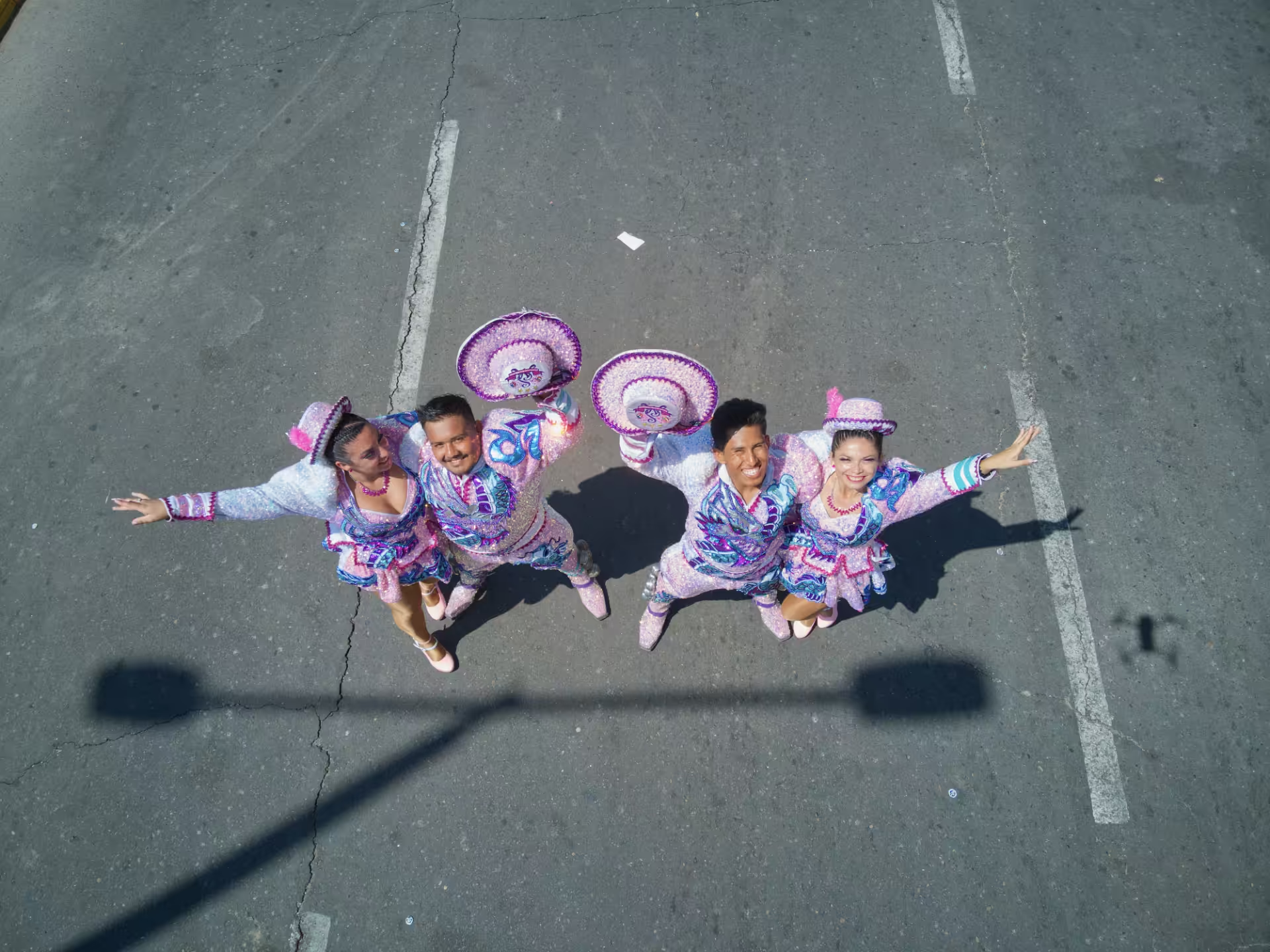
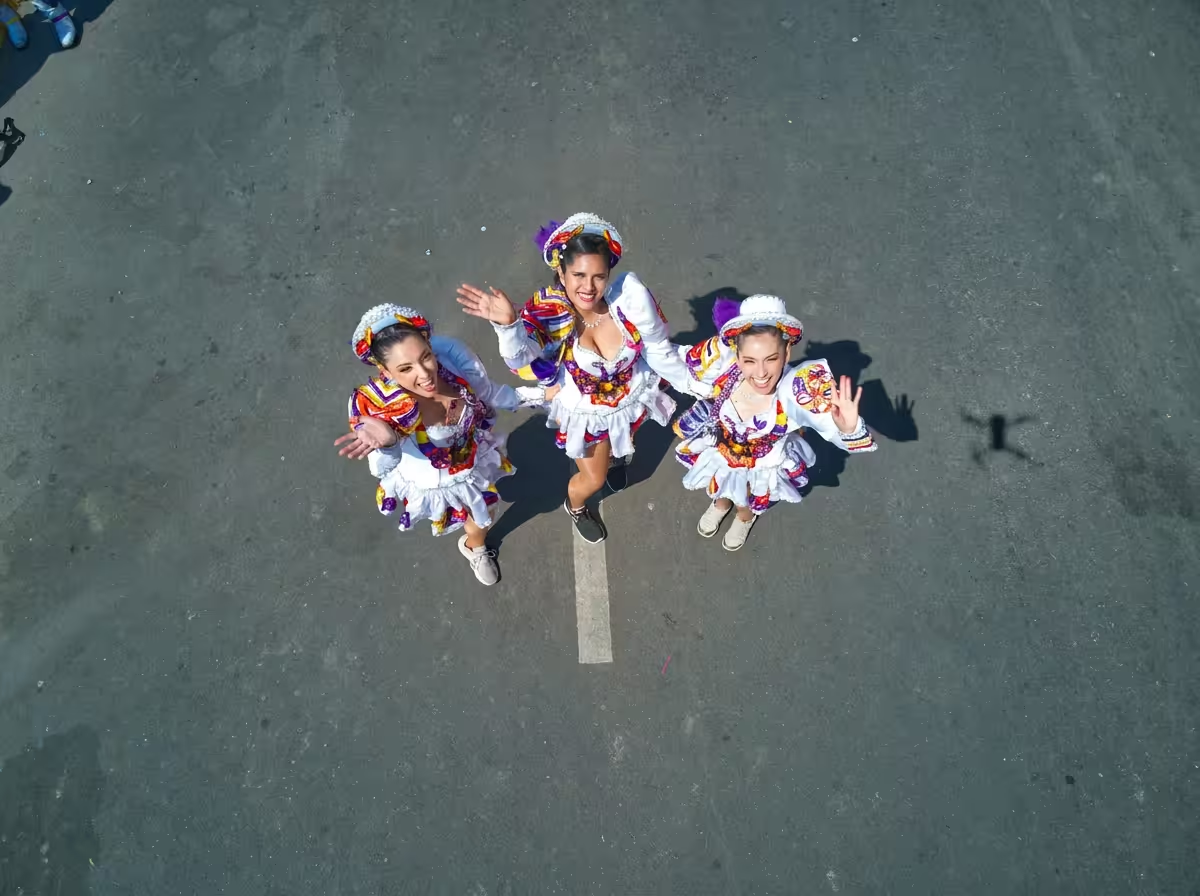
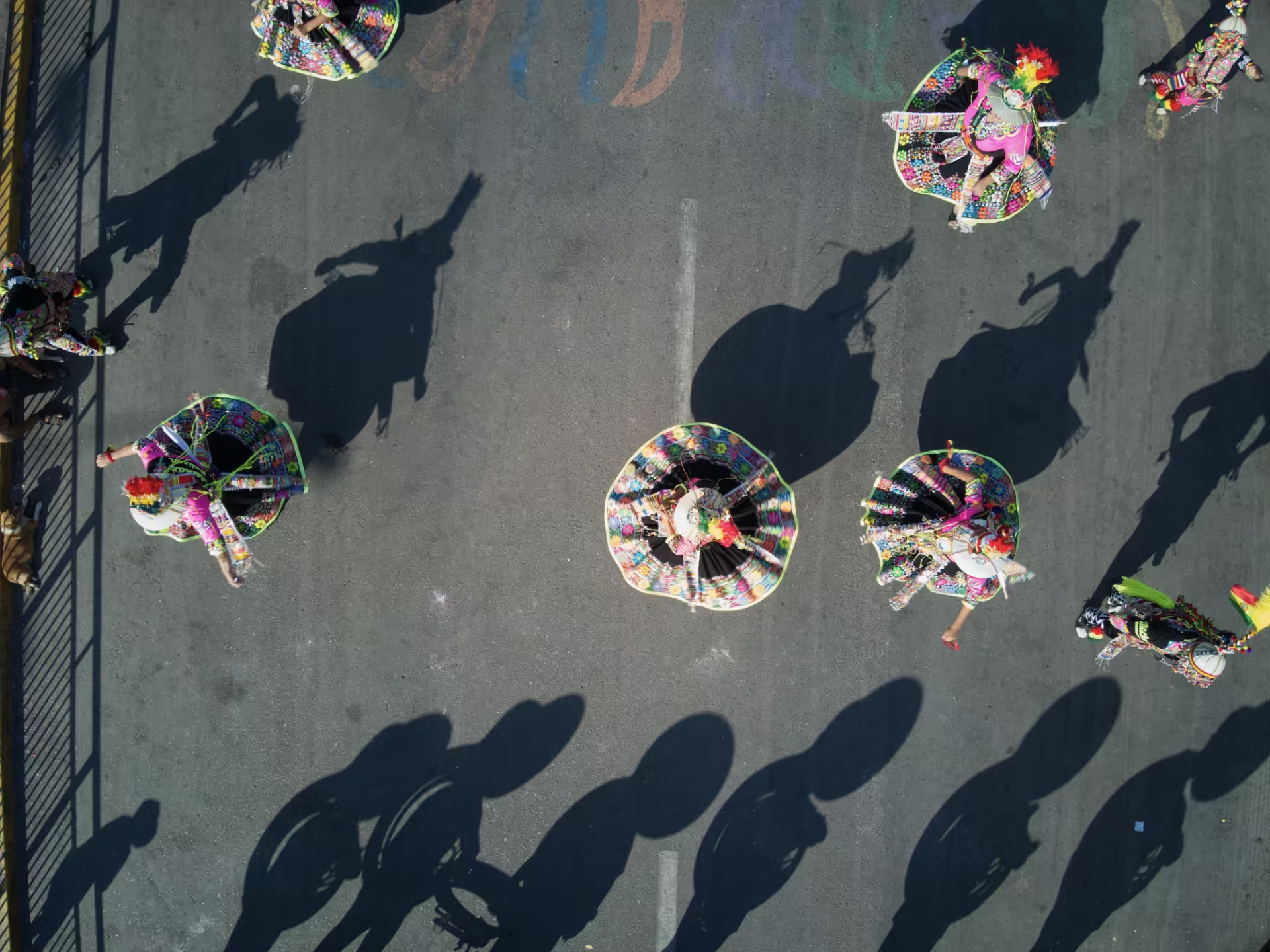
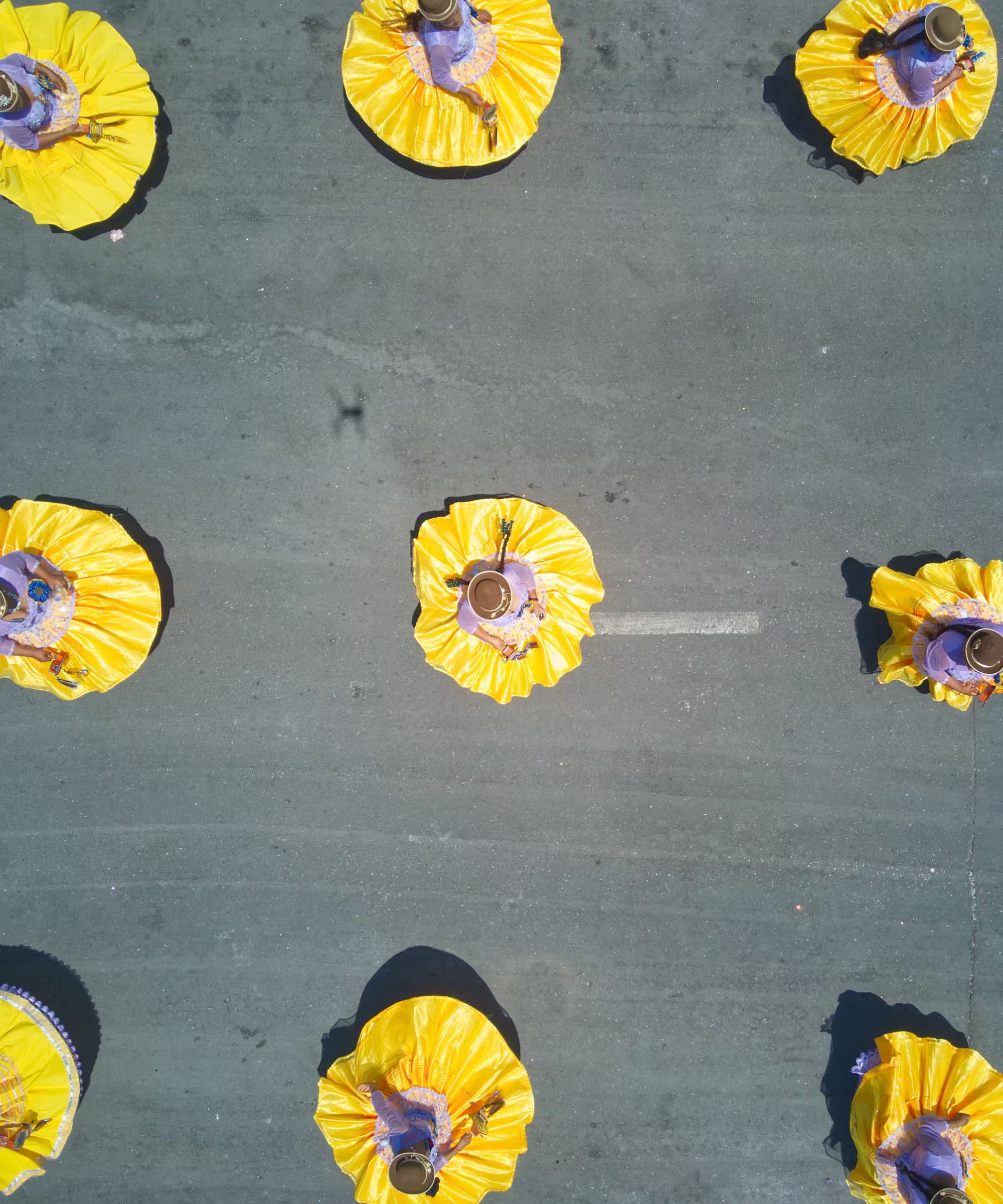
Como profesional del diseño, mi enfoque fue analítico, estilístico visual y crítico, evaluando aspectos clave como la coreografía, el dominio escénico, la variedad de pasos y, por supuesto, la riqueza del vestuario, donde por primera vez introduje el concepto de evaluar los colores del vestuario en su conjunto, ya que el nivel era tan bueno y profesional que había que ser muy crítico y evaluar de manera muy estricta.
Para que dimensionen la escala de este desafío, no se trata solo de una fiesta local, sino de un motor cultural que este año movilizó a más de 49.000 participantes, entre bailarines, músicos y coreógrafos. La responsabilidad técnica fue inmensa: evaluamos a 68 agrupaciones bajo una rúbrica estricta donde cada calificación iba de 0 a 50 puntos.
Un detalle crítico en nuestro flujo de trabajo fue la inmediatez, ya que las notas debían registrarse al momento de terminar cada presentación y, una vez ingresadas, eran irrevocables, lo que nos obligó a mantener un estado de concentración absoluta durante jornadas que se extendían hasta las nueve de la mañana.
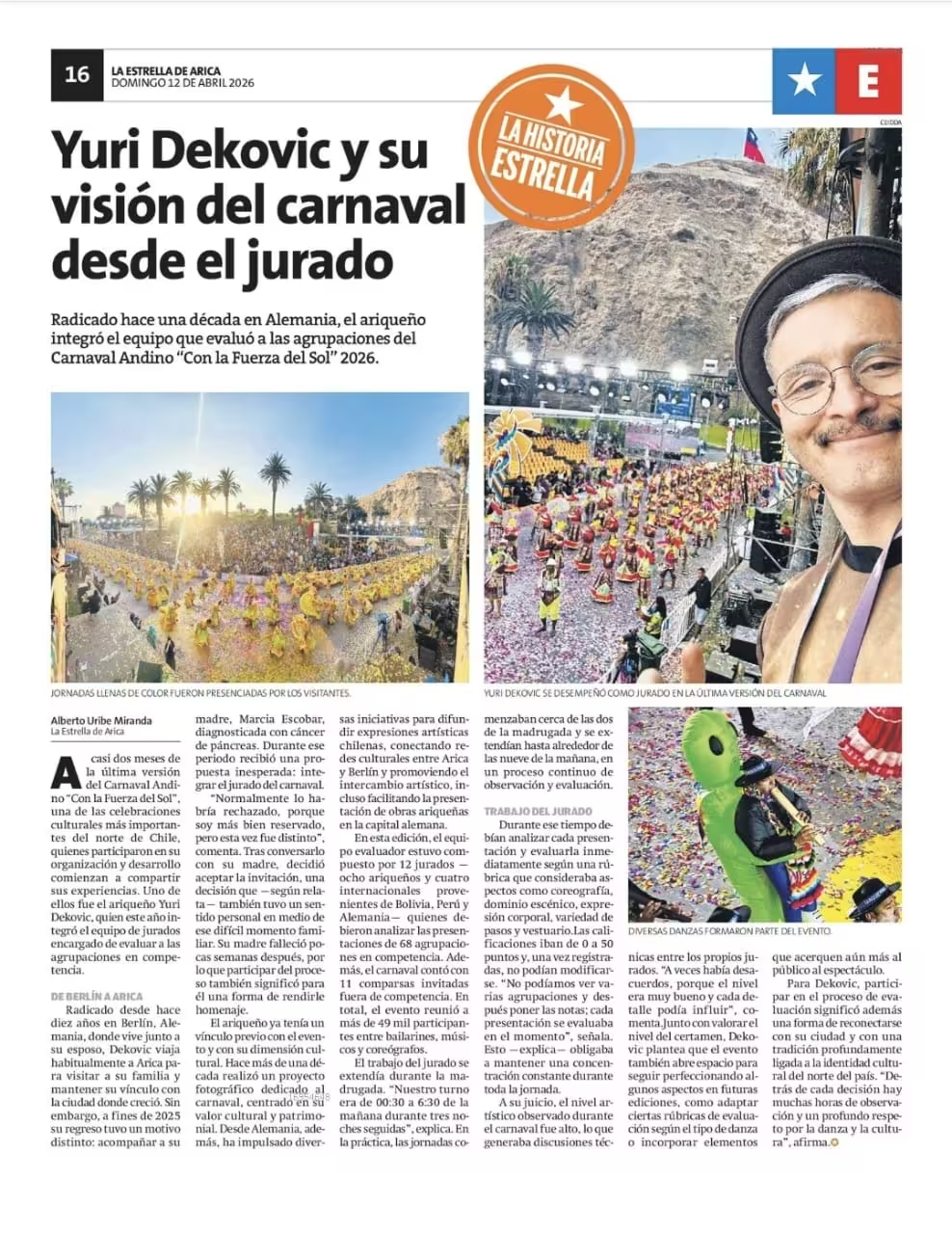
También fue un honor integrar un equipo de jurados con una mirada tan diversa, compuesto por ocho profesionales ariqueños y cuatro expertos internacionales provenientes de Bolivia, Perú y Chile. Esta mezcla de visiones, que incluso fue destacada en una entrevista que me realizó el diario La Estrella de Arica, permitió que las discusiones técnicas fueran de un nivel altísimo, analizando cada detalle de la expresión corporal y el dominio escénico con mis colegas ❤️.
La Inteligencia Artificial a mi favor
Para gestionar la carga cognitiva que implica evaluar a miles de participantes de manera inmediata y sin posibilidad de modificar la nota posterior al registro, se me ocurrió crear un “Asistente de Evaluador de Carnaval” mediante un Custom GPT. Mientras pasaban las agrupaciones, yo anotaba palabras sueltas, comentarios que iba sintiendo a media que el grupo iba pasando, y la IA me ayudaba a recordar las rúbricas específicas según el estilo de danza. También me ayudaba a transformar mis pensamientos en algo más concreto en el contexto de las rúbricas de evaluación.
Aquí hay un ejemplo de lo que le escribí a uno de los grupos de caporales:
Caporales Kusi Jatha:
buena energía, excelente sincronización, algunos desfases en una esquina, piel de gallina, vestuario impecable. Colores complementarios del traje formaban un espectaculo visual increible con los 500 bailarines en bloque! 😍
🤖Aquí pueden acceder a lo que me respondió mi asistente
Entonces como ven utilice la tecnología a mi favor para hacer mejor mi trabajo. Creo que esta es und forma de utilizar la IA que realmente me siento en el futuro y a gusto haciendo.
Transformando Crisis en Colaboración: El Poder del Co-Diseño
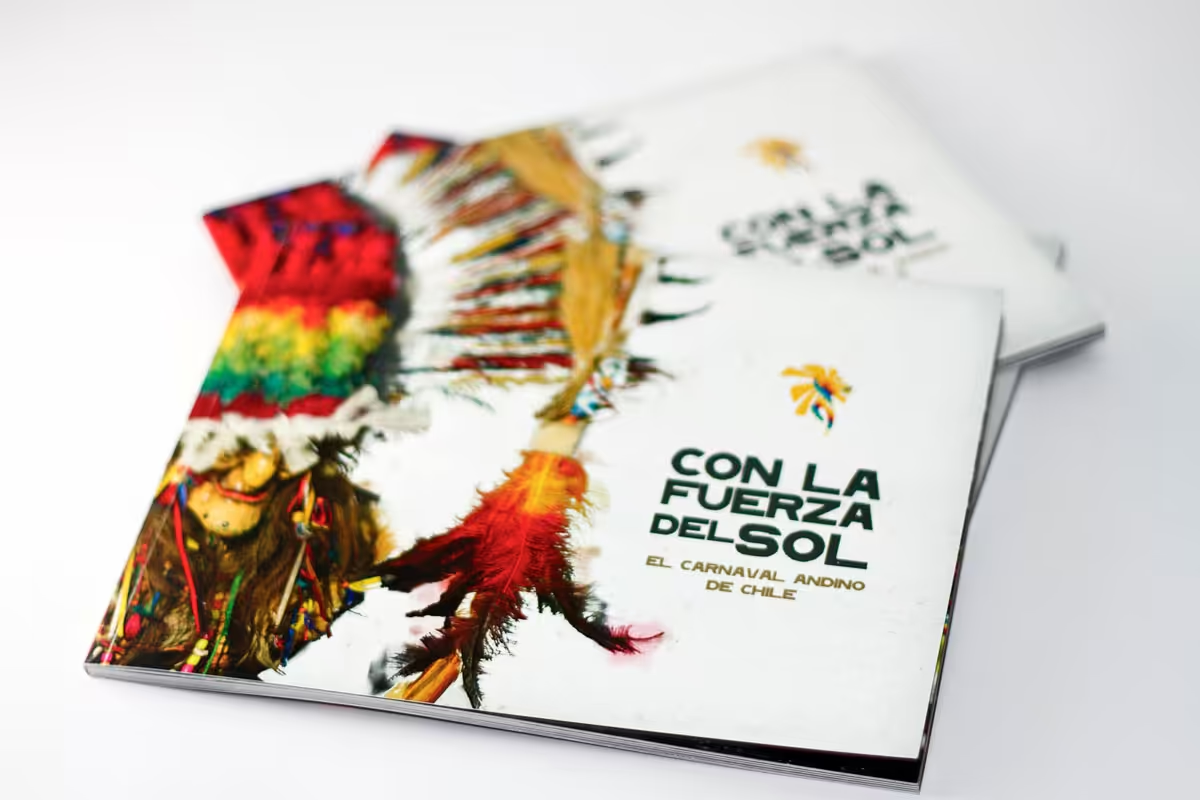
Esta experiencia me recordó un hito importante en mi trayectoria: el registro histórico visual que diseñé cuando el carnaval cumplía 10 años. En aquel entonces me pasó que el financiamiento y la cámara fotográfica no llegaron a tiempo para el inicio del evento.
Asi que se me ocurrió usar esto como una oportunidad y durante los 3 días me acerqué a las personas que veía con buenas cámaras y les ofrecí colaborar en el proyecto y yo a cambio pondría su contacto en cada foto que apareciera en el registro. Terminamos yendo a la notaría con 13 fotógrafos de orígenes tan diversos como Barcelona, Australia, México y Perú para gestionar los derechos de autor. El resultado final fue un libro mucho más rico e interesante que si lo hubiera hecho solo, ya que albergó miradas multiculturales sobre el evento.
Aquí pueden ver el PDF del libro que se imprimió.
Nuestra Identidad Ariqueña
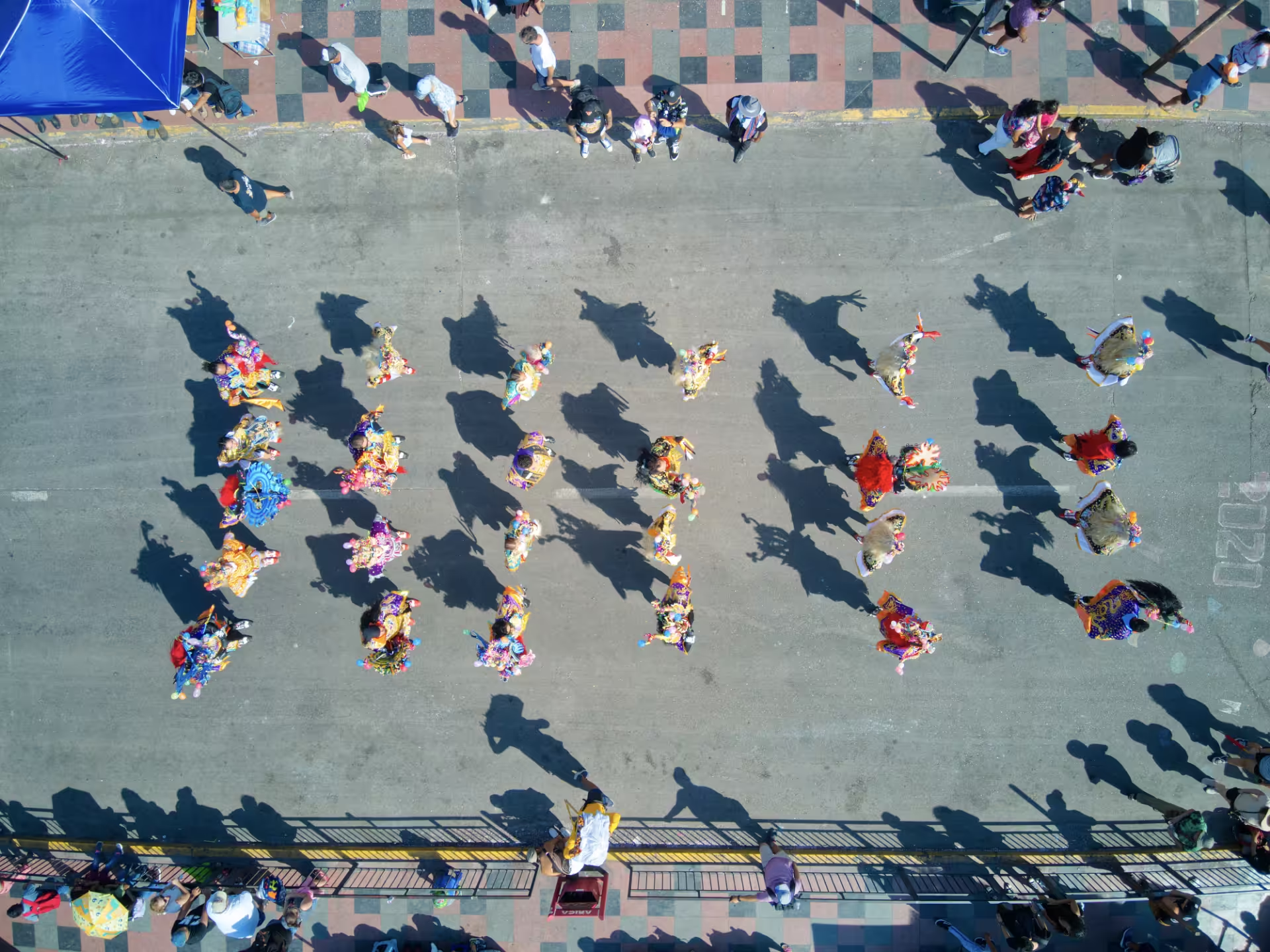
El carnaval es el reflejo de la identidad ariqueña. Es un evento donde conviven con profundo respeto las danzas de origen boliviano, con los pueblos originarios del interior de Arica y nuestras comunidades de afrodescendientes entre otros. Ver a más de 49 mil participantes moviéndose al ritmo de grandes orquestas de bronces y bombos es un recordatorio de la fuerza de nuestra cultura que trasciende fronteras entre países.
Hoy, miro hacia atrás con gratitud. Participar en este evento me permitió no solo aportar mi visión técnica para seguir perfeccionando las rúbricas de evaluación en el futuro, sino también reafirmar mi compromiso con la difusión del arte chileno en el mundo.
How I used AI to my advantage as a juror
I recently had the opportunity to take part in an event that allowed me to link my experience as a designer with my roots in Arica: my role as a judge at the 2026 ‘Con la Fuerza del Sol’ Andean Carnival in Arica, Chile.
As someone from Arica who has been living in Berlin for over a decade, my connection to Arica has never been severed. I travel there practically every year to escape the Berlin winter. However, this latest visit was different. I returned to be with my mother as she battled cancer and, in the midst of that deeply personal journey, I received an invitation to join the carnival’s panel of 12 judges. Normally I would have declined, but after discussing it with her, I accepted, turning this role into a tribute to her memory following her passing a few weeks later.
The Designer’s Eye on the Dance Floor
Serving on the judging panel meant keeping all five senses on high alert for six hours straight. We had plenty to eat and drink, and the best view of the main stage, where a single group could field over 500 dancers at a time. It was a huge logistical and cognitive challenge. For three nights in a row, in shifts stretching from two in the morning until past nine in the morning, we had the task of judging 68 competing groups.
As a design professional, my approach was analytical, visual-stylistic and critical, assessing key aspects such as choreography, stage presence, the variety of steps and, of course, the richness of the costumes, where for the first time I introduced the concept of evaluating the colours of the costumes as a whole, as the standard was so high and professional that we had to be very critical and judge very strictly.
To give you an idea of the scale of this challenge, this is not just a local festival, but a cultural driving force that this year mobilised more than 49,000 participants, including dancers, musicians and choreographers. The technical responsibility was immense: we judged 68 groups under a strict rubric where each score ranged from 0 to 50 points.
A critical aspect of our workflow was immediacy, as the scores had to be recorded as soon as each performance ended and, once entered, were final, which meant we had to maintain a state of absolute concentration throughout sessions that lasted until nine in the morning.
It was also an honour to be part of a judging panel with such a diverse perspective, comprising eight professionals from Arica and four international experts from Bolivia, Peru and Chile. This mix of perspectives, which was even highlighted in an interview I gave to the newspaper La Estrella de Arica, ensured that the technical discussions were of the highest standard, as we analysed every detail of body language and stage presence with my colleagues ❤️.
Artificial Intelligence to my advantage
To manage the cognitive load involved in evaluating thousands of participants immediately and without the possibility of changing the score after recording it, I came up with the idea of creating a ‘Carnival Judge’s Assistant’ using a Custom GPT. As the groups performed, I jotted down individual words and comments that came to mind as they passed by, and the AI helped me recall the specific assessment criteria for each dance style. It also helped me translate my thoughts into something more concrete within the context of the assessment criteria.
Here’s an example of what I wrote to one of the caporales groups:
Caporales Kusi Jatha: great energy, excellent timing, a few missteps at one corner, goosebumps, impeccable costumes. The complementary colours of the costumes created an incredible visual spectacle with the 500 dancers moving as one! 😍
🤖 Here you can see what my assistant replied
So, as you can see, I used technology to my advantage to do my job better. I think this is a way of using AI that I really feel at home with and enjoy doing.
Turning Crisis into Collaboration: The Power of Co-Design
This experience reminded me of a significant milestone in my career: the visual historical record I designed to mark the carnival’s 10th anniversary. Back then, the funding and the camera didn’t arrive in time for the start of the event.
So I decided to turn this into an opportunity and, over the course of the three days, I approached people I saw with good cameras and offered to collaborate on the project; in return, I would include their contact details on every photo that appeared in the record. We ended up going to the notary’s office with 13 photographers from as diverse a range of backgrounds as Barcelona, Australia, Mexico and Peru to sort out the copyright. The end result was a much richer and more interesting book than if I’d done it alone, as it contained multicultural perspectives on the event.
Here you can see the PDF of the book that was printed.
Our Arican Identity
The carnival is a reflection of Arica’s identity. It is an event where dances of Bolivian origin coexist with deep respect alongside the indigenous peoples of the Arica hinterland and our Afro-descendant communities, amongst others. Seeing more than 49,000 participants moving to the rhythm of great brass and drum orchestras is a reminder of the strength of our culture, which transcends national borders.
Today, I look back with gratitude. Taking part in this event allowed me not only to contribute my technical expertise to further refine the judging criteria in the future, but also to reaffirm my commitment to promoting Chilean art around the world.